
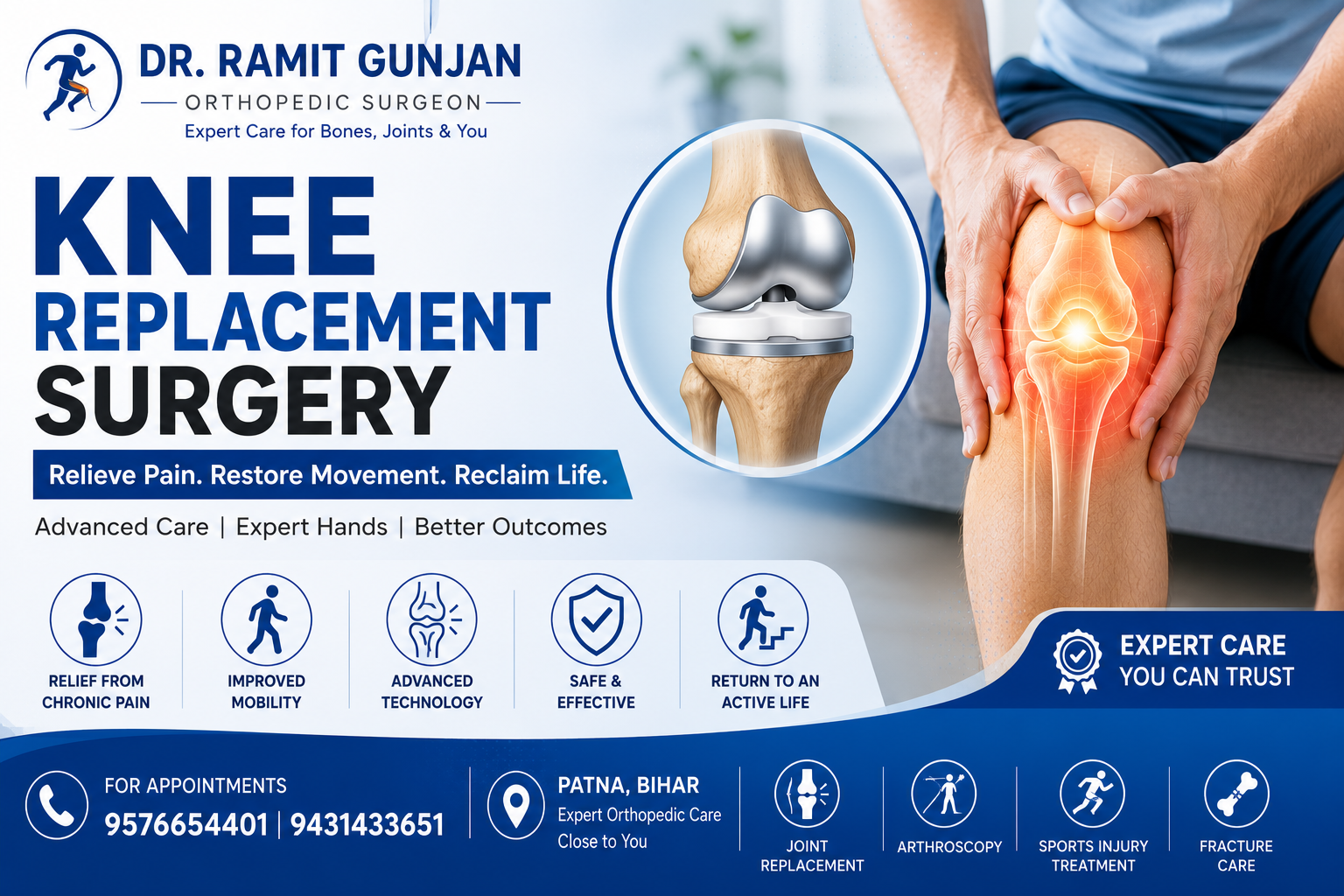
Knee pain caused by arthritis or severe joint damage can significantly affect daily life. Activities such as walking, climbing stairs, getting up from a chair, or enjoying hobbies may become difficult. When medications, physiotherapy, and lifestyle changes no longer provide adequate relief, knee replacement surgery may be considered.
Modern knee replacement techniques are designed to reduce pain, improve mobility, and help patients return to an active lifestyle. However, surgery is recommended only after a thorough evaluation by an orthopedic specialist.
In this guide, Dr. Ramit Gunjan explains who may benefit from knee replacement surgery, how the procedure is performed, expected recovery, and answers to frequently asked questions.
What Is Knee Replacement Surgery?
Knee replacement surgery, also known as Total Knee Arthroplasty (TKA), is a procedure in which the damaged surfaces of the knee joint are replaced with artificial components made from medical-grade metal and durable plastic.
The goal is to:
- Relieve chronic knee pain
- Improve joint function
- Restore mobility
- Enhance quality of life
It is important to note that the artificial joint replaces only the damaged surfaces of the knee rather than the entire joint.
Who May Need Knee Replacement Surgery?
Knee replacement may be considered for individuals who have:
Severe Osteoarthritis
The most common reason for knee replacement is advanced osteoarthritis, where cartilage gradually wears away, causing persistent pain and stiffness.
Rheumatoid Arthritis
Inflammatory arthritis can damage the knee joint over time, making surgery an option for some patients when other treatments are ineffective.
Post-Traumatic Arthritis
Previous fractures or significant knee injuries may lead to joint degeneration and chronic pain.
Persistent Knee Pain
If knee pain continues despite appropriate non-surgical treatment and interferes with daily activities, surgical evaluation may be appropriate.
Signs That You Should Consult an Orthopedic Specialist
You should seek medical evaluation if you experience:
- Persistent knee pain lasting several months
- Difficulty walking short distances
- Pain while resting or sleeping
- Swelling that keeps recurring
- Reduced knee movement
- Difficulty climbing stairs
- Knee deformity
- Limited response to medications or physiotherapy
Only an orthopedic specialist can determine whether knee replacement is appropriate based on your individual condition.
When Is Surgery Usually Recommended?
Doctors generally consider surgery after conservative treatments have been tried, such as:
- Physiotherapy
- Weight management
- Activity modification
- Pain-relieving medications (when appropriate)
- Walking aids
- Knee braces
- Selected injections
The decision depends on symptoms, physical examination, imaging findings, overall health, and patient goals.
Types of Knee Replacement Surgery
Total Knee Replacement
The damaged surfaces of the entire knee joint are replaced.
This is the most commonly performed knee replacement procedure.
Partial Knee Replacement
Only one damaged compartment of the knee is replaced.
This option is suitable only for carefully selected patients after clinical evaluation.
Revision Knee Replacement
A revision procedure may be required if a previously replaced knee develops complications such as loosening, wear, or infection. This surgery is generally more complex than the initial replacement.
How Is Knee Replacement Surgery Performed?
Although techniques may vary depending on the patient and the surgeon, the procedure generally includes:
- Administration of anesthesia.
- Making an incision over the knee.
- Removing damaged cartilage and bone surfaces.
- Preparing the bone.
- Positioning and securing the artificial joint components.
- Checking joint movement and stability.
- Closing the incision.
The exact approach depends on the patient’s condition and the surgeon’s clinical judgment.
Benefits of Knee Replacement Surgery
Many patients experience benefits such as:
- Significant reduction in knee pain
- Improved walking ability
- Better joint movement
- Improved quality of life
- Increased independence in daily activities
- Better sleep due to reduced pain
Individual outcomes vary, and no surgical result can be guaranteed.
Recovery After Knee Replacement
Recovery differs from person to person.
Immediately After Surgery
Patients are encouraged to begin gentle movement and rehabilitation under medical supervision.
Physiotherapy
A structured physiotherapy program is an important part of recovery and helps improve:
- Strength
- Flexibility
- Balance
- Walking ability
Returning to Daily Activities
Recovery timelines vary based on age, overall health, and adherence to rehabilitation. Your orthopedic team will guide you on when it is appropriate to resume specific activities.
Tips for a Smooth Recovery
- Follow your surgeon’s advice.
- Attend physiotherapy sessions regularly.
- Perform prescribed exercises safely.
- Eat a balanced diet.
- Maintain a healthy body weight.
- Use walking aids if recommended.
- Avoid high-impact activities unless advised otherwise.
- Keep follow-up appointments.
Possible Risks and Complications
As with any surgical procedure, knee replacement carries potential risks. These may include:
- Infection
- Blood clots
- Bleeding
- Stiffness
- Implant loosening over time
- Persistent pain
- Nerve or blood vessel injury (rare)
Your orthopedic surgeon will explain the potential benefits and risks before surgery and discuss ways to reduce complications.
Frequently Asked Questions (FAQs)
Is knee replacement surgery safe?
Knee replacement is a commonly performed orthopedic procedure. Suitability depends on individual health, and all surgeries involve potential risks that should be discussed with your orthopedic surgeon.
How long does an artificial knee joint last?
The lifespan of a knee implant varies depending on factors such as activity level, overall health, implant type, and follow-up care. Your surgeon can provide guidance based on your individual situation.
Will I be able to walk after surgery?
Many patients regain improved mobility after rehabilitation. Recovery timelines differ, and physiotherapy plays a key role in achieving the best possible outcome.
Will I need physiotherapy?
Yes. Physiotherapy is an important part of recovery and helps improve strength, flexibility, balance, and function.
Can both knees be replaced?
In some cases, both knees may be replaced, either during the same hospitalization or in separate procedures. The decision depends on the patient’s health and clinical assessment.
When Should You Consult Dr. Ramit Gunjan?
If knee pain is affecting your daily life despite appropriate non-surgical treatment, consult Dr. Ramit Gunjan for a comprehensive orthopedic evaluation. A personalized assessment can help determine the most appropriate treatment options based on your condition, lifestyle, and goals.
Leave a Reply