
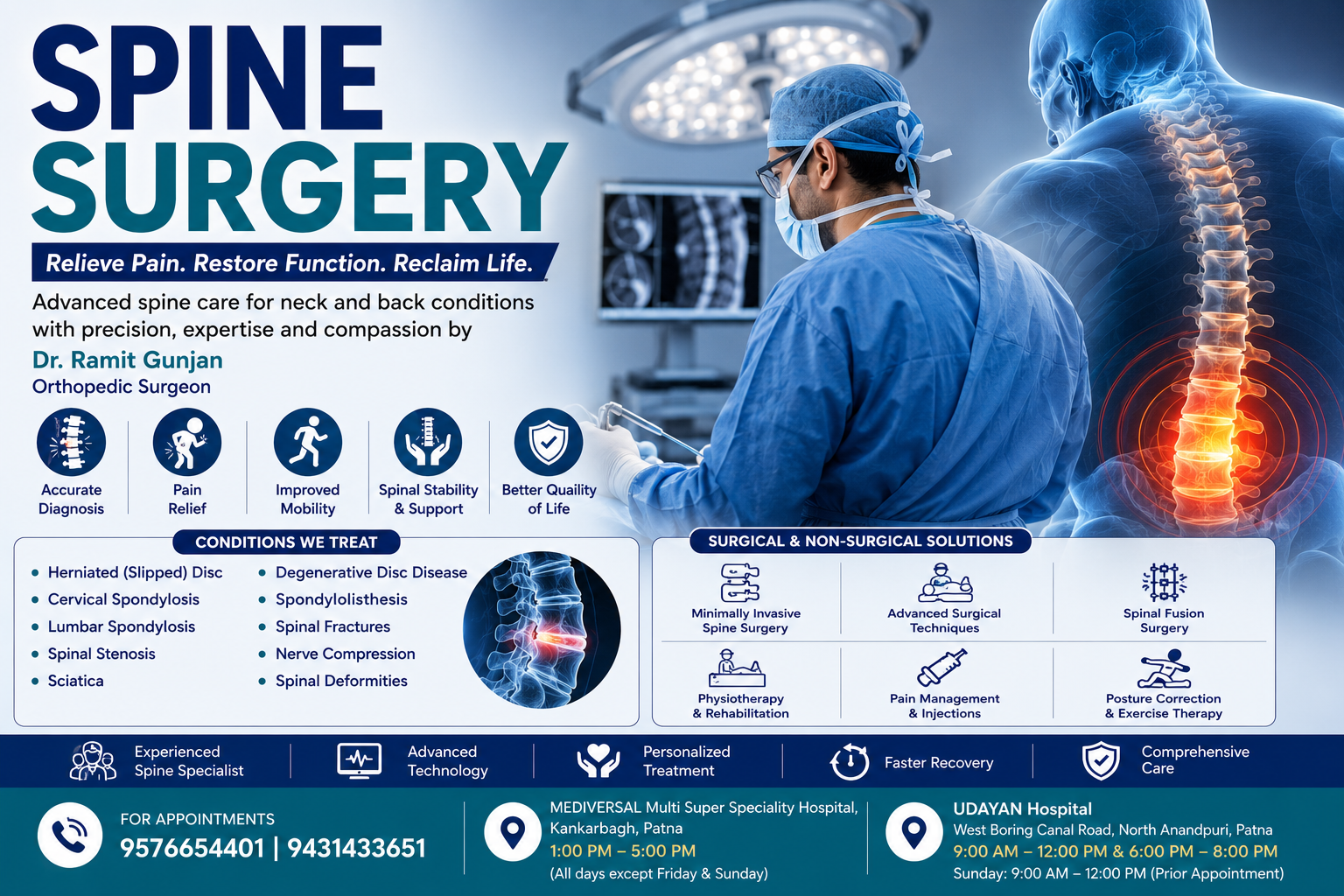
Spine Surgery in Patna
Advanced Spine Care for Better Mobility, Pain Relief, and Improved Quality of Life
The spine plays a vital role in supporting the body, protecting the spinal cord, and enabling movement. Conditions affecting the spine can lead to persistent neck pain, back pain, numbness, weakness, difficulty walking, and reduced quality of life. While many spinal disorders respond well to conservative treatment, certain conditions may require surgical intervention when symptoms continue despite appropriate non-surgical management.
Modern spine surgery focuses on relieving pressure on nerves, restoring spinal stability, and improving function while using evidence-based surgical techniques whenever indicated.
Dr. Ramit Gunjan, an experienced Orthopedic Surgeon in Patna, provides comprehensive evaluation and individualized treatment for a wide range of spinal disorders. Every treatment recommendation is based on detailed clinical assessment, diagnostic imaging, and the patient’s specific condition and treatment goals.
Understanding the Spine
The human spine consists of 33 vertebrae arranged into different regions:
- Cervical Spine (Neck)
- Thoracic Spine (Upper Back)
- Lumbar Spine (Lower Back)
- Sacrum
- Coccyx (Tailbone)
Between the vertebrae are intervertebral discs that act as cushions and absorb shock. The spinal cord and nerves travel through the spinal canal and branch out to different parts of the body.
Damage to the discs, vertebrae, joints, or nerves can result in pain, weakness, numbness, and movement difficulties.
What is Spine Surgery?
Spine surgery includes a variety of procedures performed to treat spinal conditions that do not improve with appropriate non-surgical treatment or when nerve compression, spinal instability, or structural abnormalities require surgical correction.
The objectives of spine surgery may include:
- Relieving pressure on spinal nerves
- Improving spinal stability
- Restoring normal alignment
- Reducing pain
- Improving mobility
- Preserving neurological function
Not every patient with neck or back pain requires surgery. A detailed orthopedic evaluation helps determine the most appropriate treatment.
Common Spine Conditions That May Require Surgical Evaluation
Herniated (Slipped) Disc
A slipped or herniated disc occurs when the soft inner portion of a spinal disc protrudes through its outer layer, potentially compressing nearby nerves.
Common symptoms include:
- Back pain
- Neck pain
- Leg pain (Sciatica)
- Arm pain
- Numbness
- Tingling
- Muscle weakness
Spinal Stenosis
Spinal stenosis refers to narrowing of the spinal canal, which may compress the spinal cord or nerves.
Patients may experience:
- Pain while walking
- Leg weakness
- Numbness
- Balance problems
- Difficulty standing for long periods
Degenerative Disc Disease
Age-related changes in spinal discs may contribute to chronic neck or back pain and reduced flexibility.
Spondylolisthesis
This condition occurs when one vertebra slips forward over another, potentially causing nerve compression and spinal instability.
Cervical Spondylosis
Degenerative changes affecting the cervical spine may lead to neck pain, stiffness, and nerve-related symptoms extending into the shoulders or arms.
Spinal Fractures
Certain fractures resulting from trauma or osteoporosis may require surgical stabilization.
Spinal Deformities
Selected patients with scoliosis, kyphosis, or other spinal deformities may benefit from surgical evaluation.
Common Symptoms of Spine Disorders
Symptoms vary depending on the affected region of the spine and underlying condition.
Patients commonly report:
- Chronic back pain
- Persistent neck pain
- Pain radiating into the arms
- Sciatica (pain radiating into the legs)
- Numbness
- Tingling
- Muscle weakness
- Difficulty walking
- Loss of balance
- Reduced flexibility
- Difficulty standing for long periods
- Pain during movement
- Reduced quality of life
Persistent symptoms should always be evaluated by an orthopedic specialist.
When Should You Consult a Spine Specialist?
You should consider orthopedic evaluation if you experience:
- Back pain lasting more than a few weeks
- Persistent neck pain
- Pain radiating into the arms or legs
- Numbness or tingling
- Muscle weakness
- Difficulty walking
- Loss of balance
- Reduced bladder or bowel control (requires urgent medical evaluation)
- Back pain after trauma
- Progressive spinal deformity
- Persistent symptoms despite physiotherapy and medication
Early diagnosis helps identify potentially treatable spinal conditions before they worsen.
Diagnosis Before Spine Surgery
A comprehensive evaluation is essential before considering surgical treatment.
Assessment may include:
- Detailed medical history
- Physical examination
- Neurological examination
- Muscle strength testing
- Reflex assessment
- Walking assessment
- Spine movement evaluation
- Digital X-rays
- MRI Scan
- CT Scan (when required)
- Blood investigations
- Bone density evaluation (selected patients)
These investigations help determine the exact cause of symptoms and guide individualized treatment planning.
Non-Surgical Treatment Options
Most patients with spine disorders improve without surgery.
Depending on the diagnosis, treatment may include:
Medications
Pain-relieving and anti-inflammatory medications may be prescribed when clinically appropriate.
Physiotherapy
A structured rehabilitation program may focus on:
- Improving flexibility
- Strengthening core muscles
- Improving posture
- Restoring mobility
- Reducing pain
Lifestyle Modifications
Patients may benefit from:
- Weight management
- Ergonomic workplace adjustments
- Activity modification
- Walking programs
- Core strengthening exercises
- Proper lifting techniques
Spine Injections
For selected patients, spinal injections may be considered as part of a comprehensive treatment plan.
When is Spine Surgery Recommended?
Surgery is considered only after careful evaluation and when appropriate based on the patient’s condition.
It may be recommended if:
- Conservative treatment fails to provide adequate relief
- Significant nerve compression is present
- Progressive neurological weakness develops
- Walking ability continues to deteriorate
- Certain spinal fractures require stabilization
- Spinal instability affects function
- Structural deformities require correction
The decision for surgery is always individualized after detailed clinical assessment and imaging review.
Types of Spine Surgery
Depending on the diagnosis, surgical options may include:
Microdiscectomy
Performed for selected patients with herniated discs causing nerve compression.
Laminectomy
A procedure used to relieve pressure on the spinal cord or nerves by removing part of the vertebral bone.
Spinal Fusion
Recommended in selected cases to stabilize unstable spinal segments.
Minimally Invasive Spine Surgery
For appropriate patients, minimally invasive techniques may reduce tissue disruption and support recovery.
Fracture Stabilization
Certain spinal fractures may require surgical stabilization depending on their severity and stability.
Conditions Commonly Evaluated
Dr. Ramit Gunjan evaluates patients with:
- Herniated (Slipped) Disc
- Cervical Spondylosis
- Lumbar Spondylosis
- Sciatica
- Spinal Stenosis
- Degenerative Disc Disease
- Spondylolisthesis
- Chronic Neck Pain
- Chronic Back Pain
- Spinal Fractures
- Cervical Radiculopathy
- Lumbar Radiculopathy
- Spinal Deformities
- Spine-Related Nerve Compression
Every patient receives a personalized treatment plan based on clinical findings, imaging results, symptoms, lifestyle, and functional goals.
Benefits of Spine Surgery
For patients who are appropriate candidates, spine surgery may help relieve nerve compression, improve spinal stability, reduce pain, and restore mobility. The expected outcome depends on the underlying spinal condition, overall health, and adherence to rehabilitation.
Potential benefits include:
- Relief from chronic neck or back pain
- Reduced pressure on spinal nerves
- Improved walking ability
- Better spinal stability
- Improved balance and coordination
- Enhanced mobility
- Better quality of life
- Improved ability to perform daily activities
- Restoration of functional independence
Treatment outcomes vary from patient to patient and are influenced by the diagnosis, severity of the condition, and postoperative rehabilitation.
Recovery and Rehabilitation
Recovery after spine surgery is gradual and depends on the type of procedure performed, the patient’s health, and the condition being treated.
A structured rehabilitation program plays a key role in restoring movement and function.
Early Recovery
Following surgery, patients receive guidance regarding:
- Pain management
- Wound care
- Safe movement techniques
- Walking instructions
- Activity restrictions
- Posture correction
Physiotherapy
A personalized physiotherapy program may include:
- Gentle stretching exercises
- Core strengthening
- Walking training
- Balance exercises
- Flexibility improvement
- Posture correction
- Functional rehabilitation
Physiotherapy is introduced gradually based on the type of surgery and the patient’s recovery progress.
Returning to Daily Activities
Patients usually return to routine activities in a stepwise manner under medical guidance.
The timeline depends on:
- Type of surgery
- Healing progress
- Muscle strength
- Pain levels
- Functional recovery
- Nature of work and daily activities
Your orthopedic surgeon will advise when it is appropriate to resume work, driving, exercise, or sports.
Long-Term Spine Care
Maintaining spinal health after treatment is essential for long-term outcomes.
Helpful recommendations include:
- Maintain a healthy body weight
- Stay physically active
- Perform regular stretching exercises
- Strengthen core muscles
- Maintain good posture
- Lift heavy objects correctly
- Avoid prolonged sitting
- Follow ergonomic workplace practices
- Wear supportive footwear
- Continue prescribed exercises
- Attend regular follow-up appointments
These habits help support spinal health and reduce the likelihood of future spine-related problems.
Why Choose Dr. Ramit Gunjan?
Dr. Ramit Gunjan provides evidence-based orthopedic care with a focus on accurate diagnosis, personalized treatment, and comprehensive rehabilitation for patients with spine disorders.
Patients choose Dr. Ramit Gunjan for:
- Comprehensive spine evaluation
- Personalized treatment planning
- Expertise in managing cervical and lumbar spine disorders
- Advanced surgical techniques
- Modern diagnostic approach
- Patient-centered orthopedic care
- Individualized rehabilitation guidance
- Focus on improving mobility and quality of life
- Continuity of care from diagnosis through recovery
Every treatment recommendation is based on detailed clinical evaluation, imaging findings, and the patient’s functional goals.
Frequently Asked Questions (FAQs)
Does every patient with back or neck pain require spine surgery?
No. Most patients improve with non-surgical treatment such as medications, physiotherapy, posture correction, and lifestyle modifications. Surgery is considered only when clinically appropriate.
What conditions commonly require spine surgery?
Selected patients with slipped discs, spinal stenosis, spinal instability, certain fractures, nerve compression, or specific spinal deformities may benefit from surgical treatment after comprehensive evaluation.
Is minimally invasive spine surgery available?
Minimally invasive spine surgery may be suitable for selected patients depending on the diagnosis and overall clinical condition. Your orthopedic surgeon will determine the most appropriate approach.
How long does recovery take after spine surgery?
Recovery varies depending on the type of procedure, the condition being treated, and individual healing. Your surgeon will provide guidance based on your specific situation.
Will I need physiotherapy after surgery?
Yes. Physiotherapy is an important part of recovery and helps restore strength, flexibility, posture, and spinal function.
Can spine surgery relieve nerve pain?
When nerve compression is the underlying cause and surgery is clinically indicated, relieving pressure on the affected nerve may help improve symptoms. Individual outcomes vary.
When should I seek immediate medical attention?
Urgent medical evaluation is recommended if you experience severe weakness, sudden loss of bladder or bowel control, or significant numbness after a spinal injury or alongside severe back pain.
Why Early Diagnosis Matters
Persistent neck pain, back pain, numbness, or weakness should not be ignored. Early orthopedic evaluation helps identify the underlying cause and allows timely treatment before symptoms progress further. Whether the condition requires conservative care or surgery, an accurate diagnosis is essential for developing the most appropriate treatment plan.
Related Orthopedic Services
You may also be interested in:
- Back Pain Treatment
- Neck Pain Treatment
- Arthritis Treatment
- Bone Fracture Treatment
- Trauma & Fracture Care
- Sports Injury Treatment
- Arthroscopy Surgery
- Joint Replacement Surgery
- Knee Replacement Surgery
- Hip Replacement Surgery
Book Your Consultation with Dr. Ramit Gunjan
If you are experiencing persistent neck pain, back pain, numbness, weakness, or spine-related discomfort, consult Dr. Ramit Gunjan, an experienced Orthopedic Surgeon in Patna, for a comprehensive evaluation and personalized treatment plan.
📍 Consultation Available At
🏥 MEDIVERSAL Multi Super Speciality Hospital, Kankarbagh
🕐 1:00 PM – 5:00 PM
(All days except Friday & Sunday)
🏥 UDAYAN Hospital
📍 West Boring Canal Road, North Anandpuri, Patna
🕘 9:00 AM – 12:00 PM & 6:00 PM – 8:00 PM
Sunday: 9:00 AM – 12:00 PM (Prior Appointment)
📞 Appointments
9576654401 | 9431433651