
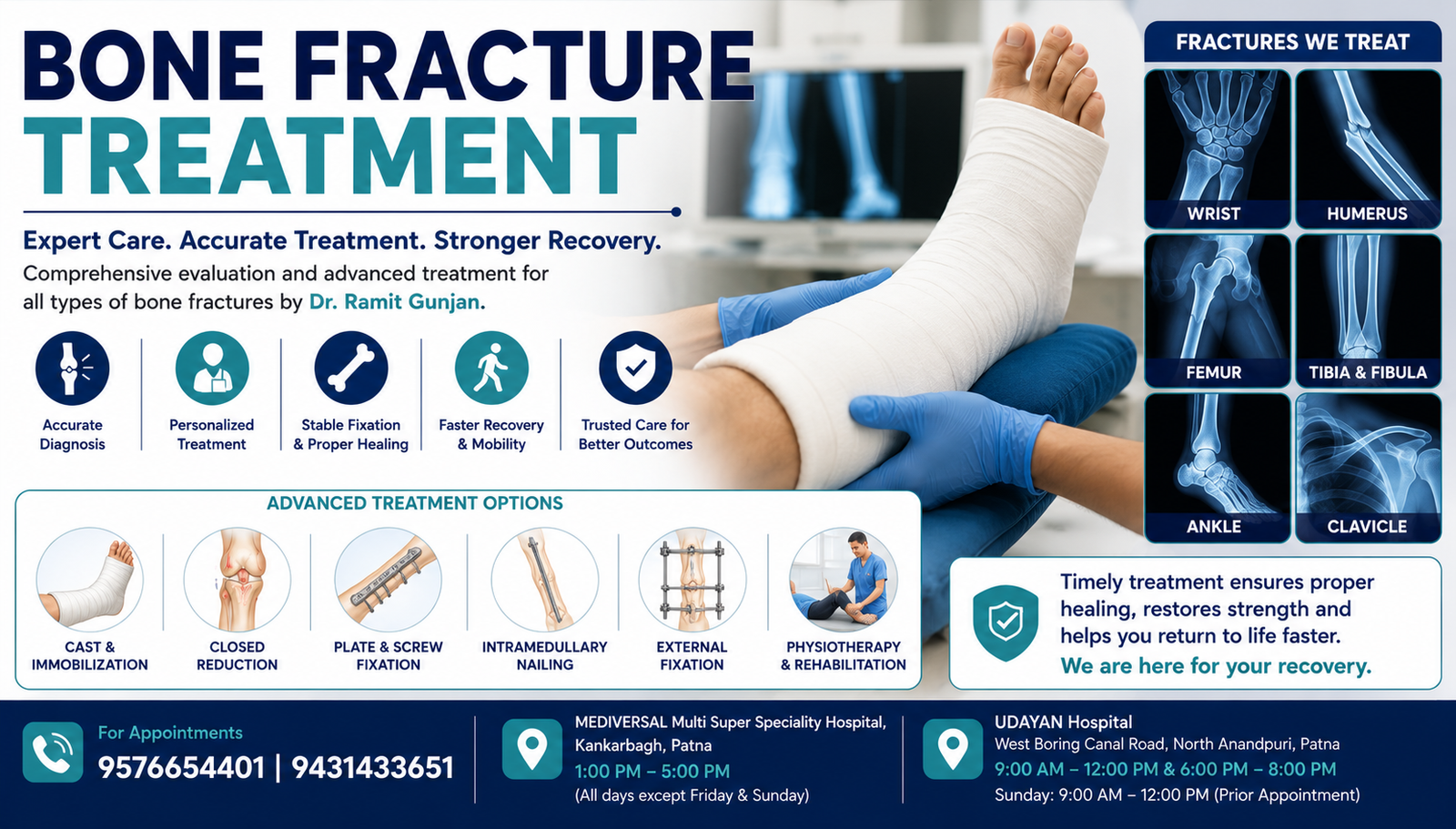
Bone Fracture Treatment in Patna
Comprehensive Fracture Care for Safe Healing and Faster Recovery
A bone fracture can occur unexpectedly due to a fall, road traffic accident, sports injury, or direct trauma. Whether it is a minor crack or a complex fracture, timely medical evaluation and appropriate treatment are essential for proper bone healing and restoration of function.
Ignoring a fracture or delaying treatment may increase the risk of improper healing, prolonged pain, reduced mobility, and long-term complications. Early diagnosis helps determine the severity of the injury and the most suitable treatment approach.
Dr. Ramit Gunjan, an experienced Orthopedic Surgeon in Patna, provides comprehensive evaluation and personalized treatment for simple and complex fractures. Treatment plans are tailored to each patient’s injury, age, activity level, and overall health.
What is a Bone Fracture?
A bone fracture refers to a break or crack in a bone caused by excessive force or weakening of the bone structure. Fractures can vary from small hairline cracks to complete breaks where the bone separates into multiple pieces.
Depending on the location and severity, fractures may require:
- Immobilization with a cast or splint
- Bracing
- Closed reduction (realignment)
- Surgical fixation using plates, screws, or rods
- Rehabilitation and physiotherapy
The treatment approach depends on the type of fracture, the affected bone, and the patient’s overall condition.
Common Types of Bone Fractures
Simple (Closed) Fracture
The bone breaks without piercing the skin. These fractures are often treated with immobilization or, in some cases, surgery depending on alignment.
Open (Compound) Fracture
The broken bone penetrates the skin, increasing the risk of infection. This type of injury usually requires urgent medical attention.
Hairline (Stress) Fracture
A small crack in the bone, commonly seen in athletes or individuals involved in repetitive physical activities.
Comminuted Fracture
The bone breaks into multiple fragments. These fractures often require surgical stabilization.
Greenstick Fracture
More commonly seen in children, where the bone bends and cracks without breaking completely.
Compression Fracture
Frequently associated with osteoporosis or spinal injuries, particularly in older adults.
Avulsion Fracture
Occurs when a ligament or tendon pulls a small piece of bone away from its normal position.
Common Causes of Bone Fractures
Fractures can occur due to various reasons, including:
- Road traffic accidents
- Falls
- Sports injuries
- Workplace accidents
- Direct impact injuries
- Twisting injuries
- Osteoporosis
- High-impact trauma
- Repetitive stress on bones
- Bone weakness due to age-related conditions
Understanding the cause of the injury helps guide appropriate treatment and rehabilitation.
Symptoms of a Bone Fracture
Symptoms vary depending on the location and severity of the injury but commonly include:
- Sudden severe pain
- Swelling around the injured area
- Bruising
- Tenderness
- Difficulty moving the affected limb
- Visible deformity
- Inability to bear weight
- Grinding sensation
- Reduced joint movement
- Pain during movement
Any suspected fracture should be evaluated promptly by an orthopedic specialist.
When Should You Seek Medical Attention?
Immediate orthopedic evaluation is recommended if you experience:
- Severe pain after an injury
- Swelling that develops rapidly
- Difficulty walking
- Inability to move a limb
- Bone deformity
- Open wound with exposed bone
- Persistent pain despite rest
- Numbness after injury
- Loss of function
- Suspected fracture after a fall or accident
Prompt medical care helps reduce the risk of complications and supports appropriate healing.
Bones Commonly Affected by Fractures
Dr. Ramit Gunjan evaluates fractures involving:
- Wrist
- Forearm
- Hand
- Fingers
- Clavicle (Collarbone)
- Shoulder
- Humerus
- Hip
- Pelvis
- Femur (Thigh Bone)
- Knee Region
- Tibia
- Fibula
- Ankle
- Foot
- Toes
Every fracture is assessed individually to determine the most appropriate treatment.
Diagnosis of Bone Fractures
A thorough orthopedic evaluation helps determine the type and severity of the fracture.
Assessment may include:
- Detailed medical history
- Physical examination
- Neurovascular assessment
- Digital X-rays
- CT Scan (when required)
- MRI Scan (selected cases)
- Bone alignment evaluation
- Assessment of surrounding soft tissues
These investigations help develop a personalized treatment plan.
Bone Fracture Treatment Options
Treatment depends on the location, severity, stability, and complexity of the fracture.
Immobilization
Many stable fractures heal successfully with:
- Cast application
- Splints
- Braces
- Slings
Immobilization helps maintain proper alignment during healing.
Closed Reduction
If the fractured bone is displaced, the orthopedic surgeon may carefully realign the bone without surgery before applying a cast or splint.
Surgical Treatment
Certain fractures require surgery to restore alignment and stability.
Depending on the injury, surgical treatment may involve:
- Plates
- Screws
- Intramedullary nails (rods)
- External fixation devices
- Other specialized orthopedic implants
The choice of procedure depends on the specific fracture pattern and clinical findings.
Rehabilitation
Following fracture treatment, rehabilitation plays an important role in restoring:
- Joint movement
- Muscle strength
- Balance
- Coordination
- Functional mobility
A structured physiotherapy program may be recommended based on the patient’s recovery needs.
Conditions Commonly Managed
Dr. Ramit Gunjan provides evaluation and treatment for:
- Simple Bone Fractures
- Complex Fractures
- Sports-Related Fractures
- Stress Fractures
- Hip Fractures
- Wrist Fractures
- Shoulder Fractures
- Ankle Fractures
- Leg Fractures
- Hand Fractures
- Pelvic Fractures
- Trauma-Related Bone Injuries
- Osteoporotic Fractures
- Multiple Bone Injuries
Each patient receives a personalized treatment plan designed to promote safe healing, restore mobility, and support long-term recovery.
Benefits of Early Bone Fracture Treatment
Receiving timely medical care after a fracture is essential for proper bone healing and restoring normal function. Early diagnosis allows the orthopedic surgeon to accurately assess the injury and recommend the most appropriate treatment, reducing the risk of complications.
Potential benefits of early fracture treatment include:
- Proper bone alignment
- Improved healing
- Reduced pain and swelling
- Better recovery of movement
- Lower risk of complications
- Improved long-term bone function
- Earlier return to daily activities
- Personalized treatment based on the type of fracture
Recovery varies depending on the patient’s age, general health, fracture location, and adherence to rehabilitation.
Recovery and Rehabilitation
Healing after a fracture is a gradual process. Recovery depends on the severity of the injury, the bone involved, and the treatment performed.
A structured rehabilitation program helps restore strength, flexibility, and function.
Immobilization Phase
During the initial healing period, your orthopedic surgeon may recommend:
- Cast care
- Splint or brace care
- Weight-bearing restrictions
- Limb elevation
- Pain management
- Swelling control
Following these instructions is important for proper healing.
Physiotherapy
Once the fracture begins to heal, physiotherapy may help:
- Restore joint mobility
- Improve muscle strength
- Increase flexibility
- Improve balance
- Restore normal walking pattern
- Improve coordination
Exercise programs are individualized according to the patient’s recovery stage.
Return to Daily Activities
Patients are encouraged to gradually resume normal activities based on medical advice. The timing depends on:
- Fracture type
- Bone healing
- Pain level
- Muscle strength
- Functional recovery
Your orthopedic surgeon will guide you regarding safe return to work, sports, and daily activities.
Bone Healing Timeline
Bone healing differs from person to person.
Several factors influence recovery, including:
- Patient’s age
- Type of fracture
- Bone involved
- Overall health
- Nutritional status
- Smoking habits
- Medical conditions
- Compliance with treatment
Regular follow-up appointments help monitor bone healing through clinical assessment and imaging.
Tips to Promote Bone Healing
Healthy lifestyle choices can support fracture recovery.
Recommendations include:
- Eat a balanced diet rich in calcium and protein
- Maintain adequate Vitamin D levels
- Avoid smoking
- Limit alcohol consumption
- Follow medical advice carefully
- Perform prescribed exercises
- Attend follow-up appointments
- Avoid excessive strain on the injured limb
- Take medications only as prescribed
These measures can contribute to optimal bone healing.
Fracture Prevention Tips
Although not every fracture can be prevented, certain habits may reduce the risk of injury.
Helpful measures include:
- Maintain strong bones through regular exercise
- Consume a calcium-rich diet
- Ensure adequate Vitamin D intake
- Wear appropriate protective sports equipment
- Improve balance and coordination
- Remove household fall hazards
- Wear supportive footwear
- Practice safe lifting techniques
- Use seat belts while driving
- Seek treatment for osteoporosis if diagnosed
These preventive strategies support long-term bone health.
Why Choose Dr. Ramit Gunjan?
Dr. Ramit Gunjan provides evidence-based orthopedic care with an emphasis on accurate diagnosis, individualized treatment planning, and comprehensive rehabilitation.
Patients choose Dr. Ramit Gunjan for:
- Comprehensive fracture evaluation
- Personalized treatment plans
- Expertise in trauma and fracture care
- Advanced surgical techniques
- Modern diagnostic approach
- Compassionate patient care
- Focus on restoring mobility
- Individualized rehabilitation guidance
- Continuity of care from diagnosis through recovery
Every treatment recommendation is tailored to the patient’s injury pattern, lifestyle, and functional goals.
Frequently Asked Questions (FAQs)
What should I do if I suspect a fracture?
Seek immediate medical evaluation. Avoid moving the injured limb unnecessarily and support it until professional medical care is available.
Do all fractures require surgery?
No. Many fractures heal successfully with casts, splints, or braces. Surgery is recommended only when necessary based on the fracture pattern and stability.
How long does a fracture take to heal?
Healing time varies depending on the bone involved, the type of fracture, the patient’s age, and overall health. Your orthopedic surgeon will monitor healing through follow-up examinations.
Can I walk with a fractured leg?
Walking should only begin when advised by your orthopedic surgeon. Weight-bearing recommendations depend on the specific fracture and stage of healing.
Will I need physiotherapy?
Many patients benefit from physiotherapy after fracture healing to restore joint movement, muscle strength, and normal function.
What foods help bone healing?
A balanced diet containing calcium, protein, Vitamin D, and other essential nutrients supports healthy bone healing. Your doctor may also recommend nutritional supplements when appropriate.
Can fractures heal improperly?
Yes. Delayed treatment or inadequate immobilization may result in improper healing. Early orthopedic evaluation helps reduce this risk.
Why Early Diagnosis Matters
Prompt treatment of a bone fracture is essential to promote proper healing and reduce the likelihood of long-term complications. Delaying medical evaluation may lead to poor bone alignment, prolonged pain, stiffness, or reduced function. Early orthopedic care allows timely diagnosis and appropriate management based on the nature of the injury.
Related Orthopedic Services
You may also be interested in:
- Trauma & Fracture Care
- Sports Injury Treatment
- Arthroscopy Surgery
- Joint Replacement Surgery
- Knee Replacement Surgery
- Hip Replacement Surgery
- Arthritis Treatment
- Back Pain Treatment
- Neck Pain Treatment
Book Your Consultation with Dr. Ramit Gunjan
If you have sustained a bone injury or suspect a fracture, consult Dr. Ramit Gunjan, an experienced Orthopedic Surgeon in Patna, for a comprehensive evaluation and personalized treatment plan.
📍 Consultation Available At
🏥 MEDIVERSAL Multi Super Speciality Hospital, Kankarbagh
🕐 1:00 PM – 5:00 PM
(All days except Friday & Sunday)
🏥 UDAYAN Hospital
📍 West Boring Canal Road, North Anandpuri, Patna
🕘 9:00 AM – 12:00 PM & 6:00 PM – 8:00 PM
Sunday: 9:00 AM – 12:00 PM (Prior Appointment)
📞 Appointments
9576654401 | 9431433651