Trauma & Fracture Care in Patna
Comprehensive Orthopedic Trauma Care for Safe Recovery and Restored Mobility
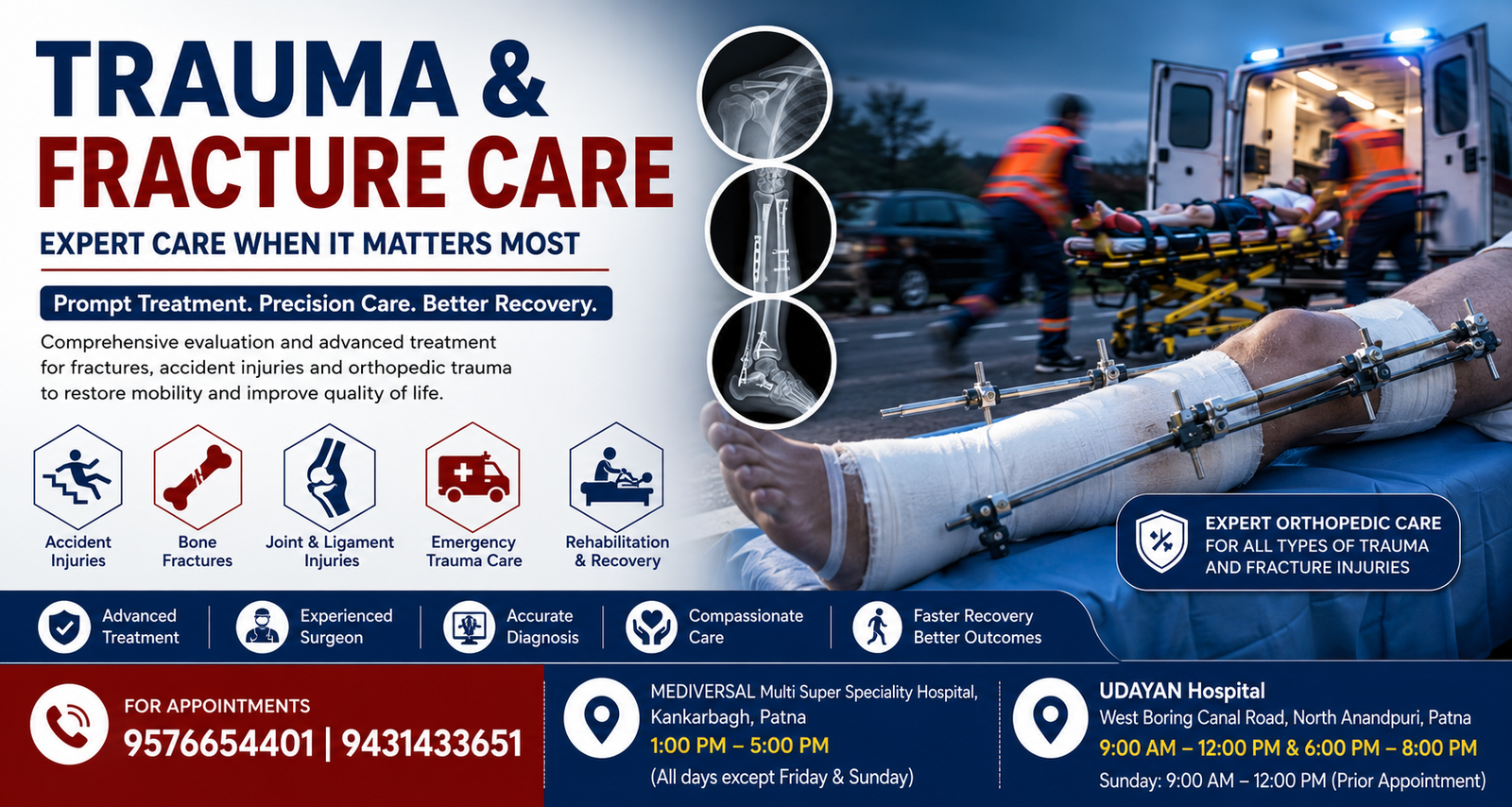
Accidents and traumatic injuries can happen unexpectedly and may affect the bones, joints, muscles, ligaments, tendons, and surrounding soft tissues. Whether caused by a road traffic accident, fall, sports injury, workplace incident, or other trauma, prompt orthopedic evaluation is essential for appropriate treatment and recovery.
Fractures and orthopedic trauma vary from simple bone injuries to complex fractures involving joints or multiple bones. Early diagnosis and timely management help promote proper healing, restore mobility, and reduce the risk of long-term complications.
Dr. Ramit Gunjan, an experienced Orthopedic Surgeon in Patna, provides comprehensive evaluation and personalized treatment for a wide range of orthopedic trauma and fracture conditions. Every treatment plan is based on detailed clinical assessment, imaging findings, injury severity, and the patient’s overall health.
What is Orthopedic Trauma?
Orthopedic trauma refers to injuries affecting the musculoskeletal system, including:
- Bones
- Joints
- Ligaments
- Tendons
- Muscles
- Cartilage
- Soft tissues
These injuries may result from sudden high-impact trauma or lower-energy injuries depending on age and bone health.
Treatment aims to restore normal anatomy, improve function, reduce pain, and support safe recovery.
What is a Fracture?
A fracture is a break or crack in a bone caused by excessive force or weakened bone strength.
Fractures vary in severity and may require:
- Immobilization
- Splints
- Casts
- Closed reduction
- Surgical fixation
- Rehabilitation
The treatment approach depends on the type, location, and stability of the fracture.
Common Trauma Conditions Treated
Dr. Ramit Gunjan evaluates a wide range of orthopedic trauma injuries, including:
Simple Bone Fractures
Fractures involving a single bone without major displacement.
Complex Fractures
Fractures involving multiple fragments, joint surfaces, or unstable bone injuries.
Open (Compound) Fractures
Bone fractures associated with an open wound requiring urgent orthopedic management due to the increased risk of infection.
Closed Fractures
Fractures where the skin remains intact.
Joint Injuries
Trauma involving:
- Knee
- Shoulder
- Elbow
- Wrist
- Hip
- Ankle
These injuries may involve ligaments, cartilage, or bone.
Sports Trauma
Orthopedic injuries sustained during sports or recreational activities affecting muscles, ligaments, tendons, or bones.
Road Traffic Accident Injuries
Trauma resulting from motorcycle, bicycle, or motor vehicle accidents.
Workplace Injuries
Bone and joint injuries sustained during occupational activities.
Common Causes of Orthopedic Trauma
Orthopedic trauma commonly results from:
- Road traffic accidents
- Falls
- Sports injuries
- Workplace accidents
- Twisting injuries
- Direct impact
- Heavy object injuries
- High-impact trauma
- Recreational activities
- Osteoporotic fractures in older adults
Understanding the mechanism of injury helps determine the most appropriate treatment.
Common Symptoms of Trauma and Fractures
Symptoms depend on the severity and location of the injury but may include:
- Sudden severe pain
- Swelling
- Bruising
- Bone deformity
- Difficulty moving the injured limb
- Inability to bear weight
- Joint instability
- Tenderness
- Reduced range of motion
- Visible swelling
- Numbness or tingling
- Open wounds associated with fractures
Prompt orthopedic evaluation is recommended whenever a fracture or serious injury is suspected.
When Should You Seek Immediate Orthopedic Care?
You should seek urgent medical attention if you experience:
- Severe pain after an accident
- Suspected fracture
- Visible bone deformity
- Open wounds with suspected fracture
- Difficulty walking after injury
- Inability to move an arm or leg
- Significant swelling
- Persistent bleeding
- Joint dislocation
- Numbness following trauma
Early treatment may help improve recovery and reduce complications.
Bones Commonly Affected by Trauma
Dr. Ramit Gunjan evaluates injuries involving:
- Clavicle (Collarbone)
- Shoulder
- Humerus
- Elbow
- Forearm
- Wrist
- Hand
- Fingers
- Pelvis
- Hip
- Femur
- Knee
- Tibia
- Fibula
- Ankle
- Foot
- Toes
Each injury is assessed individually to determine the most suitable treatment approach.
Diagnosis of Trauma & Fracture Injuries
Accurate diagnosis is essential for effective treatment.
Evaluation may include:
- Detailed medical history
- Physical examination
- Neurovascular assessment
- Joint stability evaluation
- Digital X-rays
- CT Scan
- MRI Scan (when indicated)
- Soft tissue assessment
- Bone alignment evaluation
These investigations help determine the severity of the injury and guide treatment planning.
Treatment Options
Treatment depends on:
- Type of injury
- Bone involved
- Severity of fracture
- Joint involvement
- Patient’s age
- Activity level
- Overall health
Non-Surgical Treatment
Many fractures heal successfully without surgery.
Treatment may include:
- Cast application
- Splints
- Braces
- Slings
- Pain management
- Activity modification
- Physiotherapy
Closed Reduction
Some displaced fractures can be realigned without surgery before immobilization.
Surgical Treatment
Certain injuries require surgery to restore stability and alignment.
Depending on the fracture, treatment may involve:
- Plates
- Screws
- Intramedullary nails
- External fixation devices
- Other orthopedic implants
The choice of treatment is individualized according to the fracture pattern and clinical findings.
Rehabilitation
Following fracture treatment, rehabilitation focuses on restoring:
- Joint mobility
- Muscle strength
- Flexibility
- Balance
- Coordination
- Functional independence
A structured physiotherapy program is recommended whenever appropriate.
Conditions Commonly Evaluated
Dr. Ramit Gunjan provides comprehensive evaluation and treatment for:
- Simple Fractures
- Complex Fractures
- Open Fractures
- Closed Fractures
- Sports Trauma
- Accident Injuries
- Joint Injuries
- Bone Injuries
- Multiple Trauma
- Upper Limb Fractures
- Lower Limb Fractures
- Pelvic Injuries
- Hip Fractures
- Wrist Fractures
- Shoulder Injuries
- Orthopedic Trauma
Every patient receives a personalized treatment plan aimed at promoting safe healing, restoring movement, and supporting long-term recovery.
Benefits of Early Trauma & Fracture Care
Prompt orthopedic evaluation after a fracture or traumatic injury plays an important role in promoting proper healing and restoring function. Early diagnosis helps determine the severity of the injury and allows timely treatment, reducing the risk of complications.
Potential benefits of early trauma care include:
- Proper bone alignment
- Improved fracture healing
- Reduced pain and swelling
- Better joint function
- Lower risk of complications
- Faster functional recovery
- Improved mobility
- Personalized treatment based on the injury pattern
Recovery varies depending on the severity of the injury, the patient’s overall health, and adherence to rehabilitation.
Recovery and Rehabilitation
Recovery following orthopedic trauma depends on the type of injury, treatment method, and the patient’s healing response.
A structured rehabilitation program helps restore strength, mobility, and independence.
Initial Recovery Phase
Following treatment, patients receive guidance regarding:
- Pain management
- Wound care
- Cast or splint care
- Weight-bearing instructions
- Swelling control
- Safe movement techniques
Following medical advice during this phase supports proper healing.
Physiotherapy
Physiotherapy plays an essential role in recovery and may include:
- Joint mobility exercises
- Muscle strengthening
- Balance training
- Flexibility exercises
- Walking training
- Functional rehabilitation
- Coordination exercises
Rehabilitation programs are individualized according to the patient’s injury and stage of recovery.
Return to Daily Activities
Patients gradually return to routine activities based on:
- Bone healing
- Muscle strength
- Joint mobility
- Pain levels
- Functional recovery
- Medical guidance
Your orthopedic surgeon will advise when it is appropriate to resume work, driving, sports, or other physical activities.
Tips to Help Prevent Fractures and Orthopedic Trauma
While not all injuries can be prevented, adopting healthy safety practices may reduce the risk of fractures.
Helpful recommendations include:
- Wear seat belts while driving
- Use protective sports equipment
- Wear appropriate footwear
- Maintain strong bones with regular exercise
- Consume adequate calcium and Vitamin D
- Improve balance and coordination
- Keep floors free of fall hazards
- Use proper lifting techniques
- Avoid risky activities without appropriate protection
- Seek treatment for osteoporosis when diagnosed
These preventive measures help support long-term musculoskeletal health.
Why Choose Dr. Ramit Gunjan?
Dr. Ramit Gunjan provides evidence-based orthopedic care with an emphasis on accurate diagnosis, individualized treatment, and comprehensive rehabilitation for trauma and fracture patients.
Patients choose Dr. Ramit Gunjan for:
- Comprehensive orthopedic trauma evaluation
- Personalized treatment plans
- Expertise in fracture management
- Advanced surgical techniques
- Modern diagnostic approach
- Patient-centered orthopedic care
- Individualized rehabilitation guidance
- Focus on restoring mobility and function
- Continuity of care from diagnosis through recovery
Every treatment recommendation is tailored according to the patient’s injury, medical condition, and functional goals.
Frequently Asked Questions (FAQs)
What should I do if I suspect a fracture?
Seek immediate medical evaluation. Avoid unnecessary movement of the injured limb and support it until professional medical care is available.
Do all fractures require surgery?
No. Many fractures heal successfully with casts, splints, or braces. Surgery is recommended only when necessary based on the type, location, and stability of the fracture.
How long does fracture healing take?
Healing time varies depending on the bone involved, the severity of the fracture, the patient’s age, and overall health. Your orthopedic surgeon will monitor healing through regular follow-up visits.
Can I walk after a leg fracture?
Weight-bearing should begin only when advised by your orthopedic surgeon. Recommendations depend on the specific injury and stage of healing.
Why is physiotherapy important after trauma?
Physiotherapy helps restore movement, improve strength, reduce stiffness, enhance balance, and support a safe return to daily activities.
What complications can occur if fractures are left untreated?
Delayed or inappropriate treatment may lead to improper bone healing, persistent pain, reduced mobility, joint stiffness, deformity, and long-term functional limitations.
When should I seek emergency medical attention after an injury?
Immediate medical attention is recommended if you experience severe pain, visible deformity, open fractures, inability to move the injured limb, significant bleeding, numbness, or suspected joint dislocation following trauma.
Why Early Diagnosis Matters
Orthopedic trauma and fractures should never be ignored. Early evaluation allows accurate diagnosis, appropriate treatment, and timely rehabilitation, helping reduce complications and improve long-term recovery. Whether the injury requires conservative care or surgical management, prompt treatment is essential for achieving the best possible outcome.
Related Orthopedic Services
You may also be interested in:
- Bone Fracture Treatment
- Sports Injury Treatment
- Arthroscopy Surgery
- Ligament Injury (ACL/PCL/Meniscus)
- Joint Replacement Surgery
- Knee Replacement Surgery
- Hip Replacement Surgery
- Back Pain Treatment
- Neck Pain Treatment
Book Your Consultation with Dr. Ramit Gunjan
If you have sustained an orthopedic injury or suspect a fracture, consult Dr. Ramit Gunjan, an experienced Orthopedic Surgeon in Patna, for a comprehensive evaluation and personalized treatment plan.
📍 Consultation Available At
🏥 MEDIVERSAL Multi Super Speciality Hospital, Kankarbagh
🕐 1:00 PM – 5:00 PM
(All days except Friday & Sunday)
🏥 UDAYAN Hospital
📍 West Boring Canal Road, North Anandpuri, Patna
🕘 9:00 AM – 12:00 PM & 6:00 PM – 8:00 PM
Sunday: 9:00 AM – 12:00 PM (Prior Appointment)
📞 Appointments
9576654401 | 9431433651