Sports Injury Treatment in Patna
Expert Sports Injury Care to Help You Recover Safely and Return to an Active Lifestyle
Sports and physical activities offer numerous health benefits, but they also increase the risk of injuries involving bones, muscles, ligaments, tendons, joints, and cartilage. Whether you are a professional athlete, fitness enthusiast, weekend sportsperson, or someone who enjoys recreational activities, a sports injury can significantly affect your mobility, performance, and quality of life.
Prompt evaluation and appropriate treatment are essential for minimizing complications, promoting recovery, and helping patients safely return to their desired level of activity.
Dr. Ramit Gunjan, an experienced Orthopedic Surgeon in Patna, provides comprehensive evaluation and personalized treatment for a wide range of sports-related injuries. Every treatment plan is developed after detailed clinical assessment, diagnostic evaluation, and consideration of the patient’s activity level and recovery goals.
What is a Sports Injury?
A sports injury refers to damage affecting the muscles, ligaments, tendons, bones, joints, or cartilage that occurs during sports participation, exercise, or physical activity.
Sports injuries may develop:
- Suddenly after trauma
- Due to twisting movements
- Following direct impact
- Because of repetitive overuse
- As a result of improper training techniques
Some injuries heal with conservative treatment, while others may require specialized orthopedic procedures depending on their severity.
Common Sports Injuries
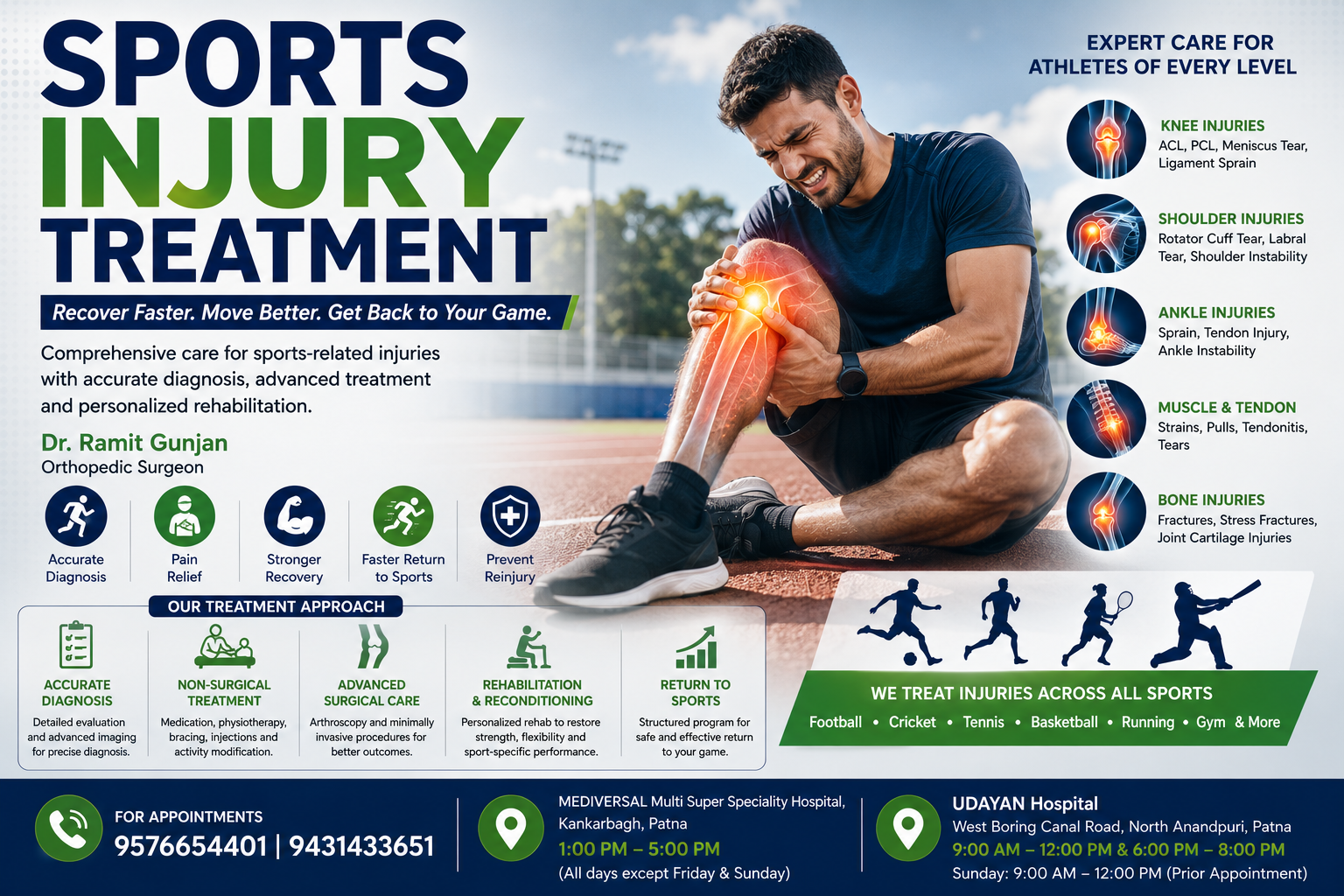
Dr. Ramit Gunjan evaluates and manages various sports-related orthopedic conditions, including:
ACL (Anterior Cruciate Ligament) Injury
A common knee ligament injury caused by sudden twisting or pivoting movements, often resulting in instability and swelling.
PCL Injury
An injury affecting the posterior cruciate ligament, commonly associated with direct impact or trauma to the knee.
Meniscus Tear
A tear in the knee cartilage that may occur during twisting movements or sports involving sudden directional changes.
Muscle Strains
Muscle fibers may become overstretched or torn during intense physical activity, leading to pain, swelling, and reduced function.
Ligament Sprains
Ligaments supporting joints may stretch or tear following sudden movements or impact injuries.
Tendon Injuries
Overuse or sudden stress can result in tendon inflammation or tears, commonly affecting the shoulder, elbow, knee, or ankle.
Shoulder Injuries
Sports involving throwing or overhead movements may lead to:
- Rotator cuff injuries
- Shoulder instability
- Labral tears
- Shoulder impingement
Ankle Injuries
Common ankle injuries include:
- Ligament sprains
- Tendon injuries
- Cartilage injuries
- Ankle instability
Stress Fractures
Small cracks in the bone caused by repetitive stress, commonly seen in runners and athletes involved in high-impact activities.
Common Symptoms of Sports Injuries
Symptoms depend on the type and severity of the injury but commonly include:
- Sudden pain
- Swelling
- Joint instability
- Muscle weakness
- Difficulty walking
- Reduced range of motion
- Joint locking
- Clicking sensation
- Bruising
- Difficulty running
- Pain during sports
- Reduced athletic performance
- Stiffness
- Difficulty bearing weight
Persistent symptoms should be evaluated by an orthopedic specialist.
Common Causes of Sports Injuries
Sports injuries may result from:
- Sudden twisting movements
- Falls
- Direct impact
- Poor training techniques
- Inadequate warm-up
- Overtraining
- Muscle fatigue
- Improper footwear
- Contact sports
- Repetitive stress
- Poor conditioning
- Previous untreated injuries
Understanding the mechanism of injury helps guide treatment planning.
Who is at Risk?
Sports injuries can affect individuals of all ages, including:
- Professional athletes
- Amateur athletes
- Fitness enthusiasts
- Gym members
- Runners
- Football players
- Cricket players
- Basketball players
- Badminton players
- Tennis players
- School and college athletes
- Individuals participating in recreational sports
Even physically active individuals without competitive sports involvement may sustain orthopedic sports injuries.
Diagnosis of Sports Injuries
Accurate diagnosis is essential for selecting the most appropriate treatment.
Evaluation may include:
- Detailed medical history
- Physical examination
- Joint stability assessment
- Muscle strength evaluation
- Walking analysis
- Functional movement assessment
- Digital X-rays
- MRI Scan
- Ultrasound (selected cases)
- CT Scan (when required)
These investigations help determine the extent of injury and support individualized treatment planning.
Non-Surgical Treatment Options
Many sports injuries improve with conservative treatment.
Depending on the diagnosis, treatment may include:
Rest and Activity Modification
Temporary reduction or modification of activities that aggravate symptoms while allowing appropriate healing.
Medications
Pain-relieving and anti-inflammatory medications may be prescribed when clinically appropriate.
Physiotherapy
A structured rehabilitation program may help:
- Restore movement
- Improve flexibility
- Strengthen muscles
- Improve joint stability
- Restore athletic performance
Bracing and Support
Certain injuries may benefit from braces, supports, or protective equipment during recovery.
Sports Rehabilitation
Individualized rehabilitation programs focus on:
- Functional recovery
- Muscle strengthening
- Balance
- Agility
- Sport-specific movement training
When is Surgery Recommended?
Although many sports injuries heal without surgery, operative treatment may be considered in selected cases where:
- Complete ligament tears cause significant instability
- Meniscus tears require repair
- Certain tendon ruptures need surgical treatment
- Complex fractures occur
- Conservative treatment fails to provide adequate improvement
- High-level athletes require restoration of joint stability
The decision is based on detailed clinical evaluation, imaging findings, activity level, and patient-specific goals.
Advanced Treatment Options
Depending on the injury, surgical management may include:
Arthroscopic Surgery
A minimally invasive procedure used to diagnose and treat injuries inside the joint through small incisions.
ACL Reconstruction
Performed for selected patients with complete ACL tears and significant knee instability.
Meniscus Repair
Certain meniscus tears may be repaired to preserve knee cartilage whenever clinically appropriate.
Tendon Repair
Selected tendon injuries may require surgical repair to restore function.
Fracture Fixation
Sports-related fractures may require surgical stabilization depending on their location and severity.
Conditions Commonly Evaluated
Dr. Ramit Gunjan provides evaluation and treatment for:
- ACL Tears
- PCL Tears
- Meniscus Tears
- Knee Ligament Injuries
- Shoulder Injuries
- Rotator Cuff Injuries
- Muscle Strains
- Tendon Injuries
- Sports Fractures
- Stress Fractures
- Ankle Sprains
- Cartilage Injuries
- Joint Instability
- Sports-Related Orthopedic Injuries
Every patient receives a personalized treatment plan designed to reduce pain, restore mobility, support healing, and facilitate a safe return to physical activity.
Benefits of Early Sports Injury Treatment
Early diagnosis and timely treatment are essential for preventing complications and supporting a safe return to physical activity. Prompt orthopedic evaluation helps identify the exact injury, allowing appropriate management before the condition worsens.
Potential benefits of early treatment include:
- Reduced pain and swelling
- Improved joint stability
- Faster functional recovery
- Better muscle strength
- Improved mobility and flexibility
- Reduced risk of recurrent injuries
- Better long-term joint health
- Personalized treatment based on the specific injury
Treatment outcomes vary depending on the severity of the injury, the patient’s overall health, activity level, and adherence to the rehabilitation program.
Recovery and Rehabilitation
Recovery from a sports injury depends on the type of injury, treatment provided, and the patient’s commitment to rehabilitation.
A structured rehabilitation program is designed to restore strength, flexibility, balance, and functional performance.
Early Recovery Phase
Immediately after treatment, patients may receive guidance regarding:
- Pain management
- Swelling control
- Joint protection
- Safe movement
- Activity modification
- Weight-bearing instructions (when applicable)
Physiotherapy
A personalized physiotherapy program may include:
- Range-of-motion exercises
- Muscle strengthening
- Balance training
- Flexibility exercises
- Core strengthening
- Joint stability training
- Functional rehabilitation
The program is tailored according to the patient’s injury and recovery progress.
Sports Rehabilitation
Sports-specific rehabilitation focuses on restoring athletic performance through:
- Agility training
- Speed training
- Coordination exercises
- Endurance improvement
- Functional movement training
- Sport-specific drills
This phase helps patients prepare for a safe return to recreational or competitive sports.
Returning to Sports
Returning to sports should be gradual and based on medical assessment rather than pain alone.
Before returning to activity, the orthopedic surgeon and physiotherapist evaluate:
- Pain-free movement
- Joint stability
- Muscle strength
- Flexibility
- Balance
- Functional performance
- Sport-specific readiness
Following a structured return-to-sport program helps reduce the risk of reinjury.
Tips to Prevent Sports Injuries
Although not all injuries can be prevented, adopting healthy training habits can significantly reduce risk.
Helpful recommendations include:
- Warm up before every workout
- Perform regular stretching exercises
- Strengthen core and supporting muscles
- Use proper sports techniques
- Wear appropriate footwear
- Use protective sports equipment when required
- Avoid overtraining
- Increase training intensity gradually
- Allow adequate rest and recovery
- Stay hydrated
- Address minor injuries early
- Maintain overall physical fitness
These preventive measures support long-term musculoskeletal health and athletic performance.
Why Choose Dr. Ramit Gunjan?
Dr. Ramit Gunjan provides evidence-based orthopedic care with a focus on accurate diagnosis, individualized treatment, and comprehensive rehabilitation for sports-related injuries.
Patients choose Dr. Ramit Gunjan for:
- Comprehensive sports injury evaluation
- Personalized treatment plans
- Expertise in ligament and joint injuries
- Advanced arthroscopic surgical techniques
- Modern diagnostic approach
- Patient-centered orthopedic care
- Individualized rehabilitation guidance
- Focus on restoring mobility and athletic performance
- Continuity of care from diagnosis through recovery
Every treatment plan is tailored to the patient’s injury, sport, activity level, and recovery goals.
Frequently Asked Questions (FAQs)
What is the most common sports injury?
Sports injuries vary by activity, but common injuries include ligament tears (ACL/PCL), meniscus tears, ankle sprains, muscle strains, tendon injuries, and stress fractures.
Do all sports injuries require surgery?
No. Many sports injuries improve with non-surgical treatment such as physiotherapy, activity modification, bracing, and medications. Surgery is recommended only when clinically appropriate.
What is arthroscopic surgery?
Arthroscopy is a minimally invasive procedure that allows the surgeon to diagnose and treat joint injuries using small incisions and specialized instruments.
How long does recovery take?
Recovery depends on the type of injury, severity, treatment method, and rehabilitation. Your orthopedic surgeon will provide guidance based on your individual condition.
Can I return to sports after treatment?
Many patients successfully return to recreational or competitive sports following appropriate treatment and rehabilitation. The timing depends on healing, strength, joint stability, and medical assessment.
Why is physiotherapy important?
Physiotherapy helps restore movement, improve strength, increase flexibility, enhance balance, and reduce the risk of future injuries.
What happens if a sports injury is ignored?
Untreated injuries may lead to chronic pain, joint instability, cartilage damage, recurrent injuries, reduced athletic performance, and early degenerative joint changes.
Why Early Diagnosis Matters
Ignoring persistent pain, swelling, instability, or reduced joint function may increase the risk of long-term complications. Early orthopedic evaluation helps identify the injury accurately, allowing timely treatment and an individualized rehabilitation plan for optimal recovery.
Related Orthopedic Services
You may also be interested in:
- Arthroscopy Surgery
- Ligament Injury (ACL/PCL/Meniscus)
- Bone Fracture Treatment
- Trauma & Fracture Care
- Joint Replacement Surgery
- Knee Replacement Surgery
- Hip Replacement Surgery
- Back Pain Treatment
- Neck Pain Treatment
Book Your Consultation with Dr. Ramit Gunjan
If you have sustained a sports injury or are experiencing persistent joint pain, swelling, instability, or reduced mobility, consult Dr. Ramit Gunjan, an experienced Orthopedic Surgeon in Patna, for a comprehensive evaluation and personalized treatment plan.
📍 Consultation Available At
🏥 MEDIVERSAL Multi Super Speciality Hospital, Kankarbagh
🕐 1:00 PM – 5:00 PM
(All days except Friday & Sunday)
🏥 UDAYAN Hospital
📍 West Boring Canal Road, North Anandpuri, Patna
🕘 9:00 AM – 12:00 PM & 6:00 PM – 8:00 PM
Sunday: 9:00 AM – 12:00 PM (Prior Appointment)
📞 Appointments
9576654401 | 9431433651