
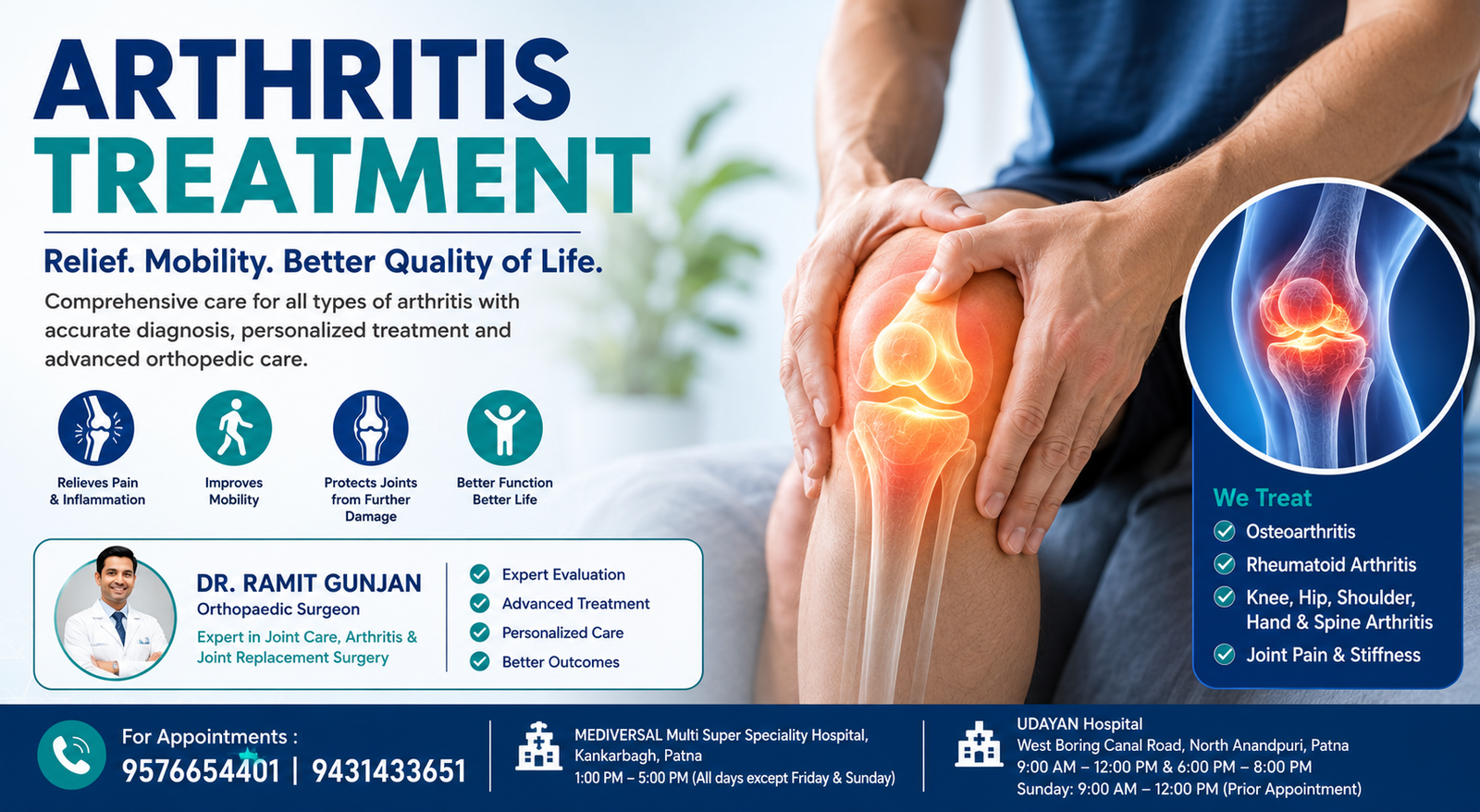
Comprehensive Arthritis Care to Help You Stay Active and Comfortable
Arthritis is one of the most common causes of persistent joint pain, stiffness, and reduced mobility. It can affect people of all ages, although it is more frequently seen in older adults. Arthritis may involve one or multiple joints and can make everyday activities such as walking, climbing stairs, writing, or lifting objects increasingly difficult.
While arthritis cannot always be prevented, early diagnosis and appropriate treatment can help manage symptoms, improve joint function, and enhance quality of life.
Dr. Ramit Gunjan, an experienced Orthopedic Surgeon in Patna, provides comprehensive evaluation and personalized treatment plans for various types of arthritis. Every patient receives an individualized approach based on their symptoms, lifestyle, medical history, and diagnostic findings.
What is Arthritis?
Arthritis is a broad term used to describe inflammation or degeneration of the joints. Healthy joints contain smooth cartilage that allows bones to move easily against one another. When this cartilage becomes damaged or inflammation develops, the joint may become painful, swollen, stiff, and difficult to move.
There are more than 100 different types of arthritis, with Osteoarthritis and Rheumatoid Arthritis being the most common.
Arthritis may affect:
- Knees
- Hips
- Shoulders
- Hands
- Fingers
- Spine
- Ankles
- Feet
- Elbows
- Wrists
Early evaluation is important to identify the specific type of arthritis and determine the most appropriate treatment.
Common Types of Arthritis
Osteoarthritis
Osteoarthritis is the most common form of arthritis. It develops when the protective cartilage covering the ends of bones gradually wears away due to aging, repetitive stress, previous injuries, or other factors.
Common symptoms include:
- Joint pain during movement
- Morning stiffness
- Swelling
- Reduced flexibility
- Grinding sensation
- Difficulty walking
Rheumatoid Arthritis
Rheumatoid Arthritis is an autoimmune condition in which the body’s immune system mistakenly attacks the joint lining, causing inflammation and progressive joint damage.
Symptoms may include:
- Pain in multiple joints
- Swelling
- Morning stiffness lasting longer than 30 minutes
- Fatigue
- Warmth around affected joints
Early diagnosis and coordinated medical care can help manage symptoms and protect joint function.
Post-Traumatic Arthritis
This type of arthritis may develop after fractures, ligament injuries, or significant trauma affecting a joint.
Other Forms of Arthritis
Additional conditions include:
- Psoriatic Arthritis
- Ankylosing Spondylitis
- Gout
- Juvenile Arthritis
An orthopedic evaluation helps identify the underlying condition and guide treatment.
Common Symptoms of Arthritis
Symptoms vary depending on the type and severity of arthritis. Common signs include:
- Persistent joint pain
- Joint stiffness
- Swelling
- Reduced range of motion
- Tenderness
- Difficulty walking
- Difficulty climbing stairs
- Pain after prolonged sitting
- Weakness around joints
- Clicking or grinding sensation
- Difficulty performing daily activities
Symptoms may gradually worsen over time if left untreated.
When Should You Consult an Orthopedic Specialist?
You should consider an orthopedic consultation if you experience:
- Joint pain lasting more than a few weeks
- Recurrent swelling
- Difficulty walking
- Morning stiffness
- Joint deformity
- Reduced mobility
- Pain interfering with work or daily activities
- Limited movement despite medication
- Difficulty using stairs
- Sleep disturbed by joint pain
Prompt evaluation can help identify the cause and allow timely management.
Common Causes and Risk Factors
Several factors may increase the likelihood of developing arthritis, including:
- Advancing age
- Previous joint injuries
- Family history
- Obesity
- Repetitive joint stress
- Autoimmune disorders
- Sports injuries
- Sedentary lifestyle
- Poor posture
- Bone deformities
Understanding these risk factors helps in planning preventive measures and treatment strategies.
Joints Commonly Affected by Arthritis
Arthritis can occur in almost any joint, but commonly affects:
Knee Arthritis
Often causes pain while walking, climbing stairs, standing, or getting up from a chair.
Hip Arthritis
May result in groin pain, stiffness, difficulty walking, and reduced hip movement.
Shoulder Arthritis
Can limit overhead movement and make lifting objects uncomfortable.
Hand and Finger Arthritis
May affect grip strength and make daily tasks such as writing or opening jars difficult.
Spine Arthritis
Can contribute to chronic neck or back pain and reduced flexibility.
Diagnosis of Arthritis
A thorough evaluation is essential to determine the type and severity of arthritis.
Diagnostic assessment may include:
- Detailed medical history
- Physical examination
- Digital X-rays
- MRI scan (when indicated)
- Blood investigations
- Assessment of joint movement
- Walking pattern evaluation
- Functional assessment
These findings help develop an individualized treatment plan.
Arthritis Treatment Options
Treatment depends on the type of arthritis, severity of symptoms, age, lifestyle, and overall health.
Lifestyle Modifications
Simple lifestyle changes may help reduce stress on the joints, including maintaining a healthy weight, staying physically active, and avoiding activities that worsen symptoms.
Medications
Depending on the diagnosis, medications may be recommended to help manage pain and inflammation under medical supervision.
Physiotherapy
A structured physiotherapy program may help improve flexibility, strengthen supporting muscles, and enhance joint function.
Activity Modification
Patients may benefit from adjusting daily activities to reduce unnecessary strain on affected joints while remaining active.
Assistive Devices
Braces, walking aids, or supportive devices may improve stability and comfort for selected patients.
Surgical Treatment
When conservative treatments no longer provide sufficient relief and joint damage significantly affects quality of life, surgical options such as Joint Replacement Surgery may be considered after comprehensive orthopedic evaluation.
The decision for surgery is always individualized and based on clinical findings, diagnostic imaging, and patient-specific needs.
Benefits of Early Arthritis Treatment
Seeking treatment early can help manage symptoms more effectively and may slow the progression of joint damage in certain types of arthritis. Early intervention also helps patients maintain an active lifestyle and perform daily activities with greater ease.
Potential benefits of timely arthritis treatment include:
- Reduced joint pain and discomfort
- Improved joint mobility and flexibility
- Better quality of life
- Enhanced ability to perform daily activities
- Reduced joint stiffness
- Improved muscle strength through rehabilitation
- Better long-term joint function
- Personalized treatment based on the type of arthritis
Treatment outcomes vary depending on the underlying condition, severity of arthritis, overall health, and adherence to the prescribed treatment plan.
Can Arthritis Be Managed Without Surgery?
Yes. Many patients with arthritis can successfully manage their symptoms through non-surgical treatment, especially when diagnosed early.
Depending on your condition, treatment may include:
- Lifestyle modifications
- Weight management
- Physiotherapy
- Activity modification
- Medications prescribed by your doctor
- Joint protection strategies
- Assistive devices when needed
Surgery is considered only when conservative treatments no longer provide adequate relief and joint damage significantly affects daily life.
When Might Surgery Be Recommended?
For some patients with advanced arthritis, surgical treatment may be considered if:
- Pain remains severe despite appropriate treatment
- Walking becomes increasingly difficult
- Daily activities are significantly affected
- Imaging shows advanced joint damage
- Joint deformity develops
- Quality of life is substantially reduced
Depending on the affected joint, procedures such as Knee Replacement Surgery, Hip Replacement Surgery, or other orthopedic interventions may be recommended after careful evaluation.
Recovery and Long-Term Joint Care
Managing arthritis is often a long-term process. Following your treatment plan can help maintain joint health and improve overall function.
Recommendations include:
- Maintain a healthy body weight
- Stay physically active with low-impact exercises
- Follow prescribed physiotherapy
- Perform regular stretching exercises
- Avoid prolonged inactivity
- Use proper posture during daily activities
- Wear supportive footwear
- Attend scheduled follow-up appointments
- Manage associated medical conditions
- Follow medical advice regarding medications
These habits can contribute to better mobility and long-term joint health.
Why Choose Dr. Ramit Gunjan?
Dr. Ramit Gunjan is committed to providing patient-focused orthopedic care using evidence-based treatment approaches tailored to each individual’s condition.
Patients choose Dr. Ramit Gunjan for:
- Comprehensive arthritis evaluation
- Personalized treatment planning
- Expertise in managing osteoarthritis and other joint disorders
- Advanced diagnostic approach
- Conservative treatment whenever appropriate
- Experience in joint replacement surgery for suitable candidates
- Compassionate patient care
- Clear communication and patient education
- Individualized rehabilitation guidance
Every treatment decision is based on detailed clinical assessment and the patient’s specific needs and goals.
Frequently Asked Questions (FAQs)
Is arthritis curable?
Most forms of arthritis are long-term conditions. While a complete cure may not always be possible, appropriate treatment can help manage symptoms, improve mobility, and maintain joint function.
What is the most common type of arthritis?
Osteoarthritis is the most common type of arthritis and is often associated with age-related cartilage wear.
Can younger people develop arthritis?
Yes. Although arthritis is more common with increasing age, certain forms such as rheumatoid arthritis, post-traumatic arthritis, and autoimmune arthritis can affect younger individuals.
Does every arthritis patient require surgery?
No. Most patients begin with non-surgical treatment. Surgery is considered only when conservative management is no longer effective and after thorough orthopedic evaluation.
Can exercise help arthritis?
Yes. Appropriate low-impact exercises and physiotherapy can improve joint flexibility, strengthen muscles, and support better mobility. Exercise programs should be tailored to the individual’s condition.
Which joints are most commonly affected?
Arthritis commonly affects the knees, hips, hands, fingers, shoulders, spine, ankles, and feet.
When should I see an orthopedic specialist?
You should seek medical evaluation if joint pain, swelling, or stiffness persists for several weeks, limits your daily activities, or continues despite home care and medications.
Why Early Diagnosis Matters
Persistent joint pain should never be ignored. Early diagnosis allows timely treatment, helps manage symptoms more effectively, and may reduce the risk of further joint damage. Consulting an orthopedic specialist at the right time can help you understand the cause of your symptoms and explore appropriate treatment options based on your individual condition.
Related Orthopedic Services
Explore our related services:
- Joint Replacement Surgery
- Knee Replacement Surgery
- Hip Replacement Surgery
- Arthroscopy Surgery
- Sports Injury Treatment
- Ligament Injury (ACL/PCL/Meniscus)
- Trauma & Fracture Care
- Back Pain Treatment
- Neck Pain Treatment
Book Your Consultation with Dr. Ramit Gunjan
If you are experiencing persistent joint pain, stiffness, or reduced mobility, consult Dr. Ramit Gunjan, an experienced Orthopedic Surgeon in Patna, for a comprehensive evaluation and a personalized arthritis treatment plan.
📍 Consultation Available At
🏥 MEDIVERSAL Multi Super Speciality Hospital, Kankarbagh
🕐 1:00 PM – 5:00 PM
(All days except Friday & Sunday)
🏥 UDAYAN Hospital
📍 West Boring Canal Road, North Anandpuri, Patna
🕘 9:00 AM – 12:00 PM & 6:00 PM – 8:00 PM
Sunday: 9:00 AM – 12:00 PM (Prior Appointment)
📞 Appointments
9576654401 | 9431433651