
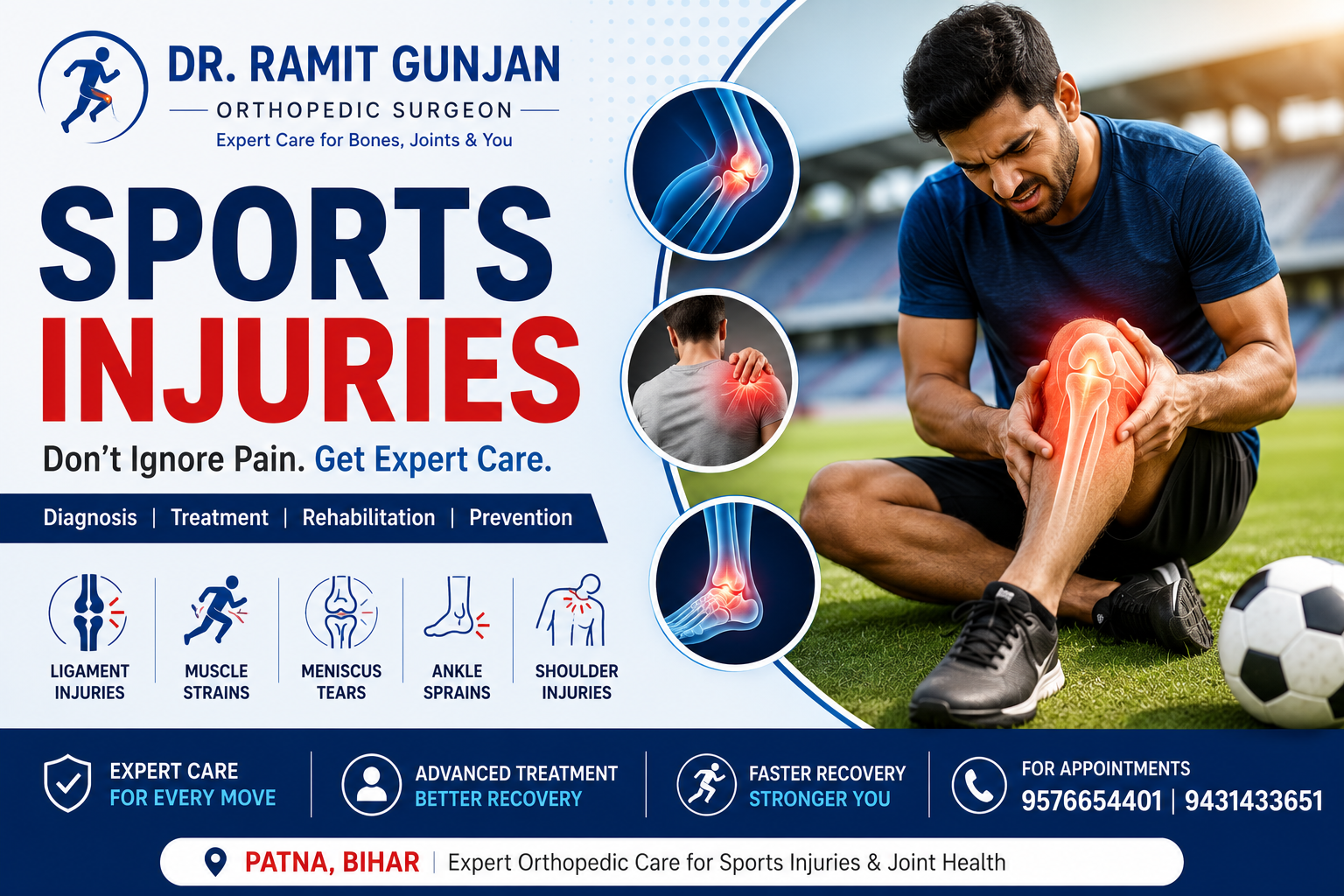
Sports Injuries: Common Bone & Joint Injuries, Treatment and Prevention Tips
Whether you’re a professional athlete, a fitness enthusiast, or someone who enjoys recreational sports, physical activity is essential for maintaining good health. However, sports and exercise also carry a risk of injuries involving bones, joints, muscles, ligaments, and tendons.
While some injuries are minor and improve with rest, others require prompt medical evaluation and treatment to prevent long-term complications. Early diagnosis, appropriate rehabilitation, and preventive measures can help you recover safely and return to your activities.
In this guide, Dr. Ramit Gunjan explains common sports injuries, their symptoms, diagnosis, treatment options, recovery process, and tips to reduce the risk of injury.
What Are Sports Injuries?
Sports injuries are injuries that occur during exercise, sports, or physical activities. They may result from:
- Sudden trauma
- Repetitive movements
- Poor training techniques
- Lack of conditioning
- Accidental falls
- Direct impact during sports
These injuries can affect people of all ages, not just competitive athletes.
Common Types of Sports Injuries
1. ACL (Anterior Cruciate Ligament) Injury
The ACL is one of the major ligaments that stabilizes the knee.
ACL injuries commonly occur during:
- Football
- Cricket
- Basketball
- Badminton
- Volleyball
Symptoms
- A popping sensation
- Sudden knee pain
- Swelling
- Knee instability
- Difficulty walking
2. Meniscus Tear
The meniscus is a cartilage cushion inside the knee that absorbs shock.
A sudden twist while the foot remains planted may cause a tear.
Symptoms
- Knee pain
- Swelling
- Locking of the knee
- Clicking sensation
- Difficulty bending the knee
3. Ankle Sprain
One of the most common sports injuries, ankle sprains occur when the supporting ligaments stretch or tear.
Symptoms
- Swelling
- Bruising
- Pain while walking
- Reduced ankle movement
4. Shoulder Injuries
Sports involving overhead movements may lead to:
- Rotator cuff injuries
- Shoulder instability
- Shoulder dislocation
5. Muscle Strains
Muscles can become overstretched or torn due to sudden movement or overuse.
Commonly affected muscles include:
- Hamstrings
- Calf muscles
- Quadriceps
- Groin muscles
6. Tendinitis
Repeated stress may inflame tendons, leading to pain and reduced performance.
Examples include:
- Tennis elbow
- Golfer’s elbow
- Achilles tendinitis
- Patellar tendinitis
7. Fractures
High-impact sports or accidents can cause fractures involving:
- Wrist
- Collarbone
- Arm
- Leg
- Ankle
Prompt orthopedic evaluation is essential for appropriate management.
Common Symptoms of Sports Injuries
Symptoms depend on the injury but may include:
- Sudden pain
- Swelling
- Bruising
- Difficulty moving the joint
- Reduced strength
- Joint instability
- Clicking or locking
- Difficulty bearing weight
Seek medical attention if symptoms are severe or persist.
Risk Factors
Sports injuries are more likely when there is:
- Poor warm-up
- Muscle weakness
- Overtraining
- Improper footwear
- Poor technique
- Lack of flexibility
- Previous injuries
- Sudden increase in training intensity
How Are Sports Injuries Diagnosed?
An orthopedic specialist may recommend:
Medical History
Understanding:
- How the injury occurred
- Previous injuries
- Symptoms
- Activity level
Physical Examination
Assessment includes:
- Joint stability
- Range of motion
- Swelling
- Tenderness
- Muscle strength
Imaging Tests
Depending on the suspected injury:
- X-ray
- MRI
- CT Scan (when required)
- Ultrasound in selected cases
Treatment Options
Treatment depends on the type and severity of the injury.
Immediate Care
For many acute injuries, initial management may include:
- Rest
- Ice application
- Compression
- Elevation
Seek medical advice for severe injuries or persistent symptoms.
Medications
Doctors may recommend medications to help manage pain and inflammation when appropriate.
Physiotherapy
Rehabilitation plays an important role by helping to:
- Restore movement
- Improve strength
- Improve flexibility
- Reduce pain
- Prevent future injuries
Braces and Support
Protective braces may provide additional support during recovery for certain injuries.
Arthroscopy
Some ligament, cartilage, or meniscus injuries may be treated using minimally invasive arthroscopic surgery when clinically appropriate.
Fracture Management
Fractures may require:
- Immobilization
- Casting
- Surgical fixation (in selected cases)
The treatment approach depends on the location and severity of the fracture.
Rehabilitation After a Sports Injury
Recovery involves more than pain relief. A structured rehabilitation program focuses on:
- Restoring mobility
- Building muscle strength
- Improving balance
- Regaining flexibility
- Safe return to sports
Returning too early may increase the risk of reinjury.
Tips to Prevent Sports Injuries
- Warm up before every workout.
- Stretch regularly.
- Wear appropriate footwear.
- Use proper sports equipment.
- Learn correct techniques.
- Increase training intensity gradually.
- Stay hydrated.
- Include strength and flexibility exercises.
- Take adequate rest between training sessions.
- Listen to your body and avoid pushing through significant pain.
When Should You See an Orthopedic Specialist?
Consult an orthopedic specialist if you experience:
- Severe pain after an injury
- Swelling that does not improve
- Inability to bear weight
- Joint instability
- Persistent pain lasting several days
- Repeated sports injuries
- Suspected ligament or fracture injury
Early evaluation may help reduce recovery time and lower the risk of long-term complications.
Frequently Asked Questions (FAQs)
Can I continue playing with a sports injury?
Continuing to play with an untreated injury may worsen the condition. It is advisable to seek medical evaluation if pain, swelling, or instability persists.
Do all sports injuries require surgery?
No. Many sports injuries can be managed successfully with non-surgical treatment such as physiotherapy, activity modification, and rehabilitation. Surgery is considered only when appropriate.
How long does recovery take?
Recovery depends on the type of injury, its severity, the treatment provided, and individual healing. Your orthopedic specialist can provide guidance based on your condition.
Can sports injuries be prevented?
While not all injuries are preventable, proper training, warm-up, conditioning, appropriate equipment, and correct technique can significantly reduce the risk.
Leave a Reply