
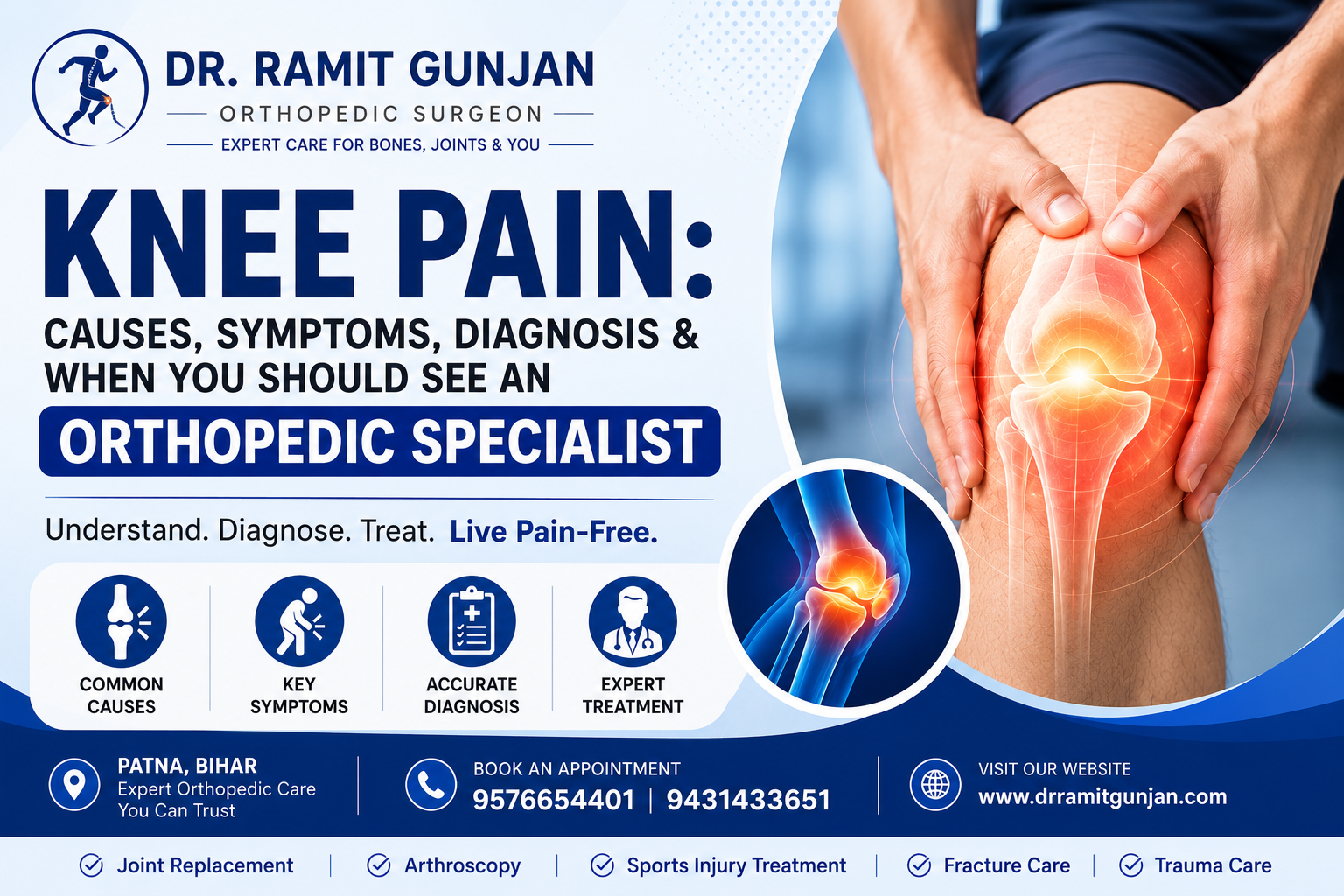
Knee pain is one of the most common musculoskeletal problems affecting people of all ages. Whether you’re an athlete, an office worker, or a senior citizen, knee pain can interfere with daily activities such as walking, climbing stairs, exercising, or even standing for long periods.
While occasional discomfort after physical activity is common, persistent or severe knee pain should never be ignored. Early diagnosis and appropriate treatment can help relieve pain, restore mobility, and prevent further damage.
In this article, Dr. Ramit Gunjan explains the common causes of knee pain, symptoms to watch for, diagnostic methods, treatment options, and when it is important to consult an orthopedic specialist.
Understanding the Knee Joint
The knee is one of the largest and most complex joints in the human body. It connects the thigh bone (femur), shin bone (tibia), and kneecap (patella). The joint also contains:
- Cartilage that cushions the bones
- Ligaments that provide stability
- Tendons that connect muscles to bones
- Menisci that absorb shock
- Synovial fluid that lubricates the joint
Because the knee supports much of the body’s weight while allowing movement, it is particularly susceptible to injuries and age-related wear.
Common Causes of Knee Pain
1. Osteoarthritis
Osteoarthritis is one of the leading causes of knee pain, especially in adults over the age of 50. It occurs when the protective cartilage gradually wears away, causing bones to rub against each other.
Common symptoms include:
- Pain while walking
- Morning stiffness
- Swelling
- Reduced flexibility
- Difficulty climbing stairs
2. Sports Injuries
Sports and physical activities can cause injuries such as:
- ACL tears
- Meniscus tears
- Ligament sprains
- Tendon injuries
These injuries often result from sudden twisting, jumping, or direct impact.
3. Overuse Injuries
Repeated stress on the knee can lead to conditions such as:
- Patellar tendinitis
- Runner’s knee
- Iliotibial band syndrome
These are common among runners, cyclists, and individuals who perform repetitive movements.
4. Bursitis
Small fluid-filled sacs called bursae reduce friction around the knee. When they become inflamed due to prolonged kneeling, injury, or repetitive motion, bursitis may develop.
5. Rheumatoid Arthritis
Unlike osteoarthritis, rheumatoid arthritis is an autoimmune condition in which the body’s immune system attacks the joints, leading to pain, swelling, and stiffness.
6. Fractures
A fall, road accident, or sports injury can cause fractures involving the kneecap or surrounding bones. These injuries require prompt medical evaluation.
7. Infection
Although less common, infections within the knee joint can cause severe pain, swelling, redness, warmth, and fever. Immediate medical attention is necessary.
Common Symptoms of Knee Pain
Symptoms may vary depending on the underlying condition but can include:
- Persistent or intermittent pain
- Swelling around the knee
- Joint stiffness
- Difficulty bending or straightening the knee
- Clicking or popping sounds
- Feeling that the knee may “give way”
- Pain while walking or climbing stairs
- Redness or warmth around the joint
Risk Factors
Certain factors increase the likelihood of developing knee problems:
- Increasing age
- Excess body weight
- Previous knee injuries
- Physically demanding occupations
- Participation in high-impact sports
- Poor muscle strength
- Incorrect exercise techniques
- Family history of arthritis
How Knee Pain Is Diagnosed
An orthopedic specialist will evaluate your condition through:
Medical History
The doctor may ask about:
- Duration of pain
- Previous injuries
- Activity level
- Medical conditions
- Symptoms that worsen or improve the pain
Physical Examination
This includes checking:
- Range of motion
- Swelling
- Joint stability
- Tenderness
- Walking pattern
- Muscle strength
Imaging Tests
Depending on your condition, investigations may include:
- X-rays
- MRI scans
- CT scans (when required)
- Ultrasound in selected cases
Laboratory Tests
Blood tests may be advised if inflammatory arthritis or infection is suspected.
Treatment Options
Treatment depends on the underlying diagnosis and severity of symptoms.
Lifestyle Modifications
Many patients benefit from:
- Weight management
- Activity modification
- Low-impact exercise
- Avoiding prolonged kneeling
- Using proper footwear
Physiotherapy
A structured rehabilitation program can help:
- Strengthen muscles
- Improve flexibility
- Restore joint function
- Reduce pain
Medications
A doctor may recommend medications to help manage pain and inflammation when appropriate. These should always be used under medical guidance.
Knee Braces and Support
Certain knee conditions may benefit from braces or supportive devices that improve stability during recovery.
Injections
For selected patients, doctors may recommend injections after evaluating the underlying condition and discussing the potential benefits and limitations.
Surgical Treatment
Surgery may be considered when conservative treatment does not provide sufficient relief or when there is significant structural damage. Procedures may include:
- Arthroscopy
- Ligament reconstruction
- Meniscus repair
- Knee replacement surgery (for advanced arthritis in appropriate candidates)
The decision depends on clinical evaluation and individual patient needs.
When Should You See an Orthopedic Specialist?
Consult an orthopedic doctor if you experience:
- Knee pain lasting more than a few days
- Significant swelling
- Difficulty walking
- Inability to bear weight
- Knee instability
- Locking of the knee
- Fever along with knee pain
- Pain following an injury
- Symptoms that interfere with daily activities
Prompt evaluation can help identify the cause and guide appropriate treatment.
Tips to Keep Your Knees Healthy
- Maintain a healthy body weight.
- Stay physically active with appropriate exercises.
- Strengthen the muscles around the knee.
- Warm up before sports or workouts.
- Wear supportive footwear.
- Use proper technique during exercise.
- Avoid sudden increases in physical activity.
- Eat a balanced diet that supports bone health.
Frequently Asked Questions (FAQs)
Can knee pain go away without surgery?
Yes. Many causes of knee pain improve with appropriate non-surgical treatment such as physiotherapy, activity modification, medications, and lifestyle changes. Treatment depends on the underlying diagnosis.
Is knee pain always caused by arthritis?
No. Knee pain can result from injuries, ligament tears, tendon problems, overuse, infections, inflammatory conditions, or other joint disorders.
How long should I wait before seeing a doctor?
If pain persists for several days, worsens, follows an injury, or affects walking and daily activities, it is advisable to seek medical evaluation.
Can exercise help knee pain?
In many cases, guided strengthening and flexibility exercises recommended by a healthcare professional can improve knee function. The type of exercise should match the underlying condition.
Leave a Reply