
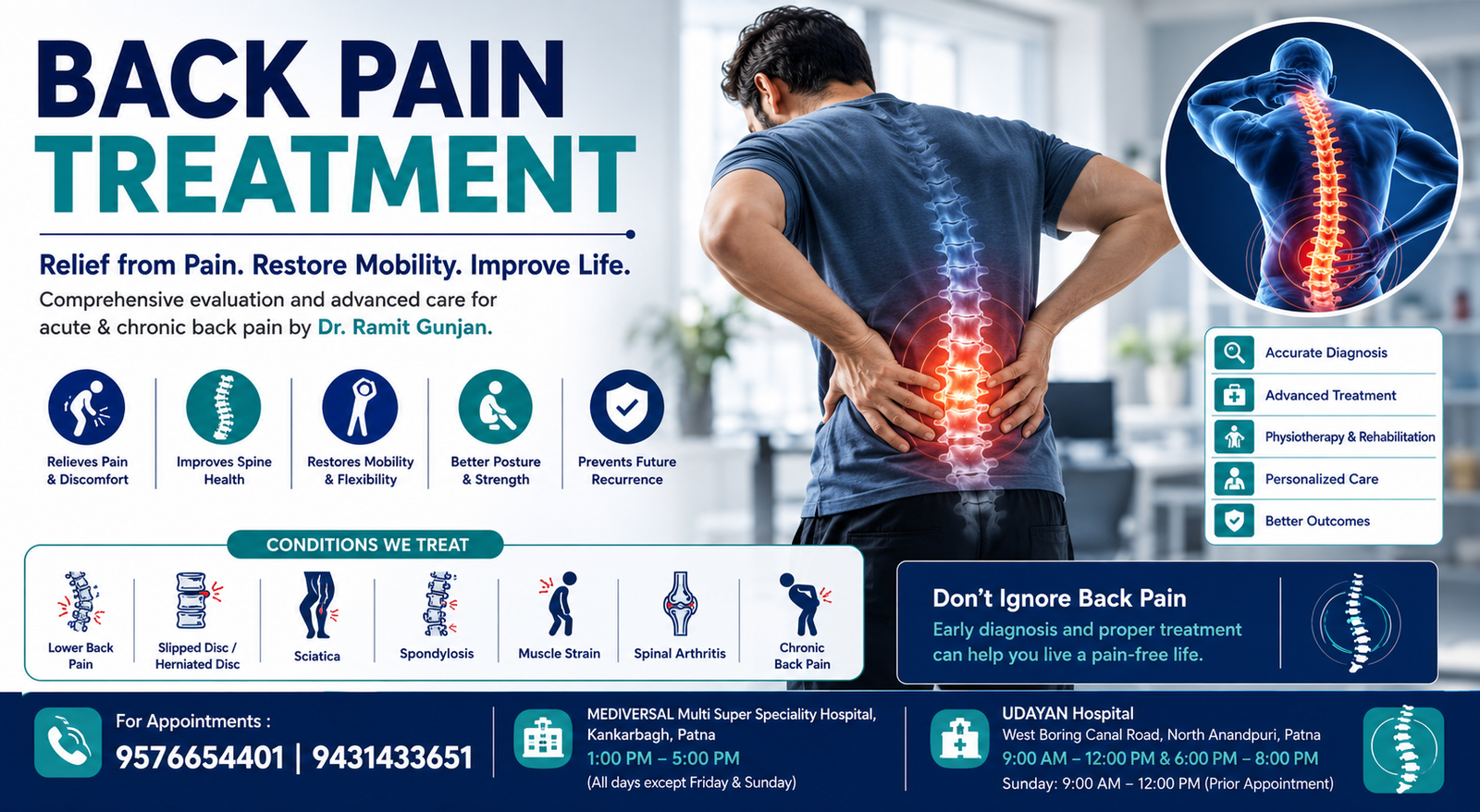
Back Pain Treatment in Patna
Comprehensive Back Pain Care to Help You Move Comfortably Again
Back pain is one of the most common musculoskeletal problems affecting people of all age groups. It may develop suddenly after lifting a heavy object or gradually due to poor posture, age-related changes, prolonged sitting, or spine-related conditions. While many episodes improve with conservative treatment, persistent or recurring back pain should be evaluated by an orthopedic specialist.
Back pain can interfere with work, sleep, exercise, and routine daily activities. Early diagnosis helps identify the underlying cause and allows appropriate treatment before the condition worsens.
Dr. Ramit Gunjan, an experienced Orthopedic Surgeon in Patna, provides comprehensive evaluation and personalized treatment for acute and chronic back pain. Treatment plans are based on detailed clinical examination, diagnostic investigations, lifestyle, and the patient’s individual needs.
What is Back Pain?
Back pain refers to discomfort occurring anywhere along the spine, including the upper back, middle back, or lower back. The lower back (lumbar spine) is the most frequently affected region because it supports much of the body’s weight and is involved in most daily movements.
Pain may range from mild muscle discomfort to severe pain that restricts movement. Some patients experience pain only during activity, while others may have persistent discomfort even while resting.
The underlying cause can vary considerably, making an accurate diagnosis essential before starting treatment.
Types of Back Pain
Acute Back Pain
Acute back pain develops suddenly and generally lasts for a few days to several weeks. It is often associated with muscle strain, improper lifting, or minor injuries.
Chronic Back Pain
Pain lasting for more than three months is generally considered chronic back pain. It may result from degenerative spine conditions, disc problems, arthritis, or other orthopedic disorders.
Mechanical Back Pain
Mechanical back pain is related to muscles, ligaments, joints, or spinal structures and is often influenced by movement and posture.
Nerve-Related Back Pain
Certain spinal conditions may irritate or compress nearby nerves, causing pain that radiates into the hips or legs.
Common Causes of Back Pain
Back pain can result from various orthopedic conditions, including:
- Muscle strain
- Ligament injury
- Poor posture
- Slipped (Herniated) Disc
- Degenerative Disc Disease
- Osteoarthritis of the Spine
- Facet Joint Arthritis
- Sciatica
- Spinal Stenosis
- Spondylosis
- Spondylolisthesis
- Sports injuries
- Previous trauma
- Osteoporosis-related spinal changes
A detailed orthopedic evaluation helps determine the exact cause and guide treatment.
Common Symptoms of Back Pain
Symptoms vary depending on the underlying condition but may include:
- Persistent lower back pain
- Upper back pain
- Pain while sitting or standing
- Difficulty bending
- Muscle stiffness
- Reduced flexibility
- Pain while walking
- Difficulty lifting objects
- Radiating pain into the hips or legs
- Numbness or tingling
- Muscle weakness
- Difficulty sleeping due to pain
If symptoms persist or worsen, medical evaluation is recommended.
When Should You Consult an Orthopedic Specialist?
You should seek medical evaluation if you experience:
- Back pain lasting more than two weeks
- Severe pain affecting daily activities
- Recurrent episodes of back pain
- Pain radiating to the legs
- Numbness or tingling
- Difficulty walking
- Reduced mobility
- Pain following an injury
- Persistent stiffness
- Back pain associated with weakness
Early diagnosis can help identify treatable conditions and prevent progression.
Risk Factors for Back Pain
Several factors increase the likelihood of developing back pain:
- Increasing age
- Poor posture
- Obesity
- Sedentary lifestyle
- Prolonged sitting
- Heavy lifting
- Repetitive bending
- Lack of exercise
- Weak core muscles
- Smoking
- Previous spinal injury
- Occupations involving repetitive physical strain
Addressing these factors may help reduce the risk of future episodes.
Diagnosis of Back Pain
A thorough assessment helps determine the cause of back pain and the most appropriate treatment.
Evaluation may include:
- Detailed medical history
- Physical examination
- Posture assessment
- Spine movement evaluation
- Neurological examination
- Digital X-rays
- MRI Scan (when indicated)
- CT Scan (selected cases)
- Blood investigations (if required)
Diagnostic findings are carefully reviewed before recommending any treatment.
Non-Surgical Treatment Options
Many patients improve with conservative treatment, particularly when diagnosed early.
Depending on the condition, treatment may include:
Activity Modification
Temporary modification of activities that aggravate symptoms while encouraging safe movement.
Medications
Pain-relieving and anti-inflammatory medications may be prescribed based on individual clinical needs.
Physiotherapy
A structured physiotherapy program may help:
- Improve flexibility
- Strengthen back and core muscles
- Improve posture
- Reduce stiffness
- Enhance mobility
Lifestyle Changes
Simple lifestyle modifications may significantly reduce stress on the spine, including:
- Maintaining a healthy body weight
- Regular physical activity
- Ergonomic workplace adjustments
- Proper lifting techniques
- Good sitting posture
Supportive Devices
In selected cases, braces or supportive devices may be recommended for short-term use.
When is Surgery Considered?
Most patients with back pain do not require surgery. Surgical treatment is considered only when:
- Conservative treatment fails to provide adequate relief
- Significant nerve compression is present
- Progressive neurological symptoms develop
- Certain structural spinal conditions require surgical management
The decision is based on clinical evaluation, imaging findings, and the patient’s overall condition.
Conditions Commonly Managed
Dr. Ramit Gunjan evaluates patients with:
- Lower Back Pain
- Upper Back Pain
- Chronic Back Pain
- Lumbar Spondylosis
- Degenerative Disc Disease
- Slipped Disc (Herniated Disc)
- Sciatica
- Spinal Osteoarthritis
- Muscle Strain
- Mechanical Back Pain
- Sports-Related Back Injuries
- Spine-Related Joint Pain
Each patient receives an individualized treatment plan tailored to their diagnosis, symptoms, lifestyle, and functional goals.
Benefits of Early Back Pain Treatment
Seeking timely medical attention for back pain can help identify the underlying cause and support more effective management. Early treatment may reduce discomfort, improve mobility, and help prevent the progression of certain spine-related conditions.
Potential benefits of early treatment include:
- Relief from persistent back pain
- Improved spinal mobility
- Better posture and body mechanics
- Enhanced flexibility
- Improved ability to perform daily activities
- Reduced muscle stiffness
- Better physical function
- Personalized treatment based on the underlying cause
Treatment outcomes vary depending on the diagnosis, severity of the condition, overall health, and adherence to the recommended treatment plan.
Recovery and Rehabilitation
Recovery depends on the cause of back pain and the treatment provided. Many patients experience improvement through conservative management combined with lifestyle modifications and rehabilitation.
A rehabilitation program may include:
Physiotherapy
A customized physiotherapy plan may help:
- Improve flexibility
- Strengthen back and core muscles
- Restore normal movement
- Improve posture
- Reduce stiffness
- Improve balance and coordination
Daily Activity Guidance
Patients are encouraged to gradually resume normal activities while avoiding movements that place excessive strain on the spine.
Home Exercise Program
Simple stretching and strengthening exercises, performed under professional guidance, can support long-term spinal health.
Follow-up Care
Regular follow-up appointments allow monitoring of progress and adjustment of the treatment plan when necessary.
Tips to Prevent Back Pain
Although not all cases can be prevented, adopting healthy habits may reduce the risk of developing back pain.
Helpful measures include:
- Maintain a healthy body weight
- Exercise regularly
- Strengthen core muscles
- Practice good posture
- Avoid prolonged sitting
- Take regular breaks while working
- Lift heavy objects correctly
- Sleep on a supportive mattress
- Wear comfortable footwear
- Stay physically active
- Avoid smoking
- Follow ergonomic workplace practices
These habits contribute to better spinal health and may reduce future episodes of back pain.
Why Choose Dr. Ramit Gunjan?
Dr. Ramit Gunjan provides patient-centered orthopedic care with a focus on accurate diagnosis, evidence-based treatment, and individualized rehabilitation.
Patients choose Dr. Ramit Gunjan for:
- Comprehensive orthopedic evaluation
- Personalized treatment plans
- Expertise in spine and musculoskeletal conditions
- Advanced diagnostic approach
- Conservative treatment whenever appropriate
- Experience in managing acute and chronic back pain
- Compassionate patient care
- Modern rehabilitation guidance
- Focus on restoring mobility and improving quality of life
Every treatment recommendation is based on the patient’s clinical findings, lifestyle, and individual healthcare needs.
Frequently Asked Questions (FAQs)
What is the most common cause of back pain?
Back pain may result from muscle strain, poor posture, degenerative changes, disc-related conditions, arthritis, or other spine disorders. A proper evaluation is needed to identify the exact cause.
Does every patient with back pain require surgery?
No. Most patients improve with non-surgical treatments such as medications, physiotherapy, activity modification, and lifestyle changes. Surgery is considered only for selected cases when clinically appropriate.
Can poor posture cause back pain?
Yes. Poor posture maintained over a prolonged period can place additional stress on the muscles and spine, contributing to back pain.
When should I consult an orthopedic specialist?
You should seek medical evaluation if back pain persists for more than a few weeks, interferes with daily activities, radiates into the legs, or is associated with numbness, weakness, or difficulty walking.
Can exercise help back pain?
Appropriate exercises prescribed by a healthcare professional can strengthen supporting muscles, improve flexibility, and help reduce recurring episodes of back pain.
What is sciatica?
Sciatica refers to pain that radiates along the path of the sciatic nerve, usually extending from the lower back into one or both legs. It often results from irritation or compression of a spinal nerve.
Is prolonged sitting harmful for the back?
Prolonged sitting without proper posture or regular movement may contribute to muscle stiffness and back pain. Taking frequent breaks and maintaining ergonomic posture can help reduce strain.
Why Early Diagnosis Matters
Persistent back pain should not be ignored. Early orthopedic evaluation can help identify the underlying cause before symptoms progress, allowing timely treatment and improved long-term outcomes. Whether the problem is related to muscles, joints, discs, or the spine, an accurate diagnosis is the first step toward effective management.
Related Orthopedic Services
You may also be interested in:
- Neck Pain Treatment
- Spine Surgery
- Arthritis Treatment
- Sports Injury Treatment
- Trauma & Fracture Care
- Arthroscopy Surgery
- Joint Replacement Surgery
- Knee Replacement Surgery
- Hip Replacement Surgery
Book Your Consultation with Dr. Ramit Gunjan
If you are experiencing persistent back pain, stiffness, reduced mobility, or spine-related discomfort, consult Dr. Ramit Gunjan, an experienced Orthopedic Surgeon in Patna, for a comprehensive evaluation and personalized treatment plan.
📍 Consultation Available At
🏥 MEDIVERSAL Multi Super Speciality Hospital, Kankarbagh
🕐 1:00 PM – 5:00 PM
(All days except Friday & Sunday)
🏥 UDAYAN Hospital
📍 West Boring Canal Road, North Anandpuri, Patna
🕘 9:00 AM – 12:00 PM & 6:00 PM – 8:00 PM
Sunday: 9:00 AM – 12:00 PM (Prior Appointment)
📞 Appointments
9576654401 | 9431433651