Arthroscopy Surgery in Patna
Advanced Minimally Invasive Joint Care for Faster Recovery and Better Mobility
Persistent joint pain, sports injuries, ligament tears, or cartilage damage can significantly affect your daily activities and overall quality of life. Whether the problem involves the knee, shoulder, ankle, or another joint, timely diagnosis and appropriate treatment are essential for restoring function and preventing further damage.
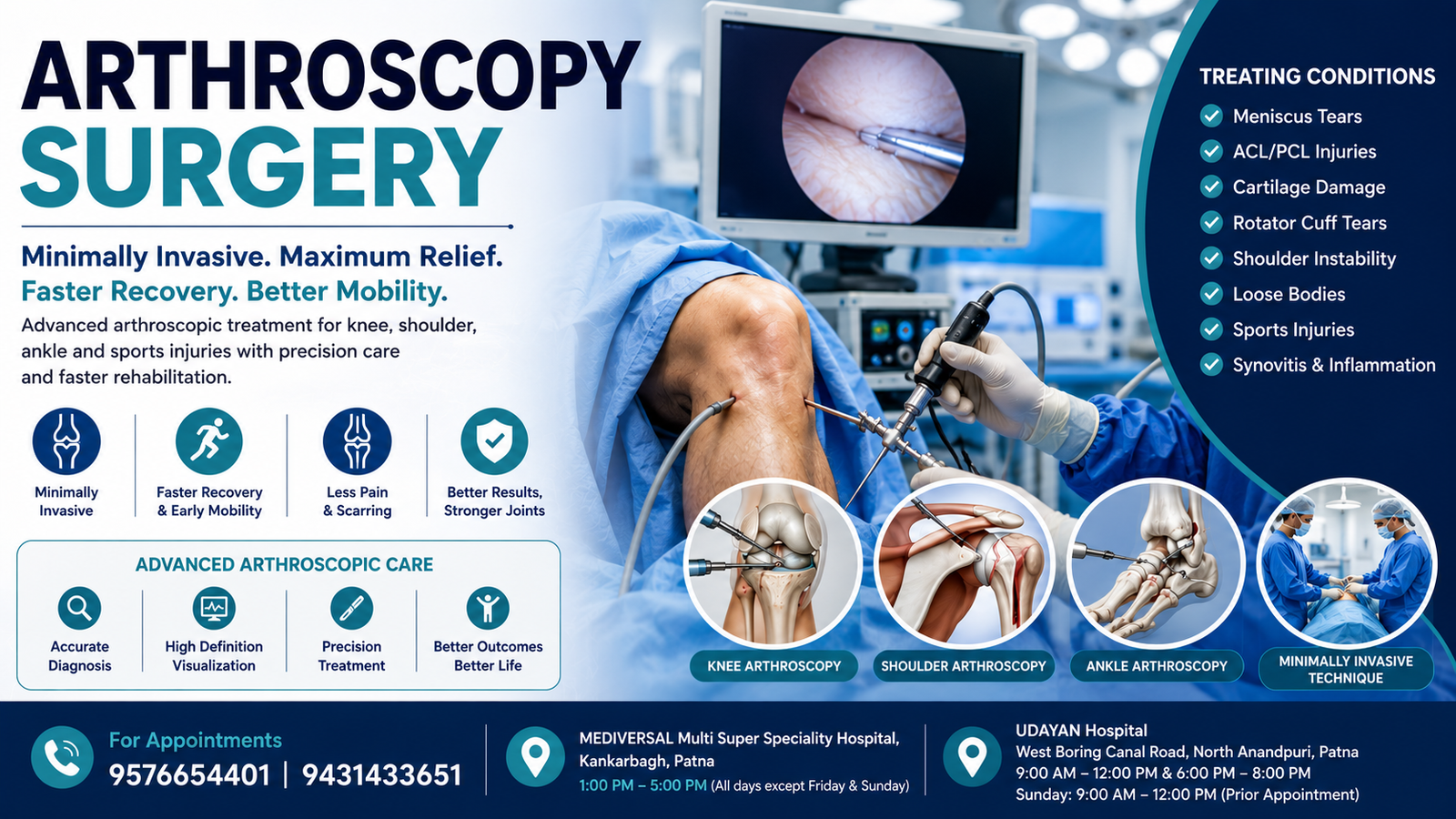
Arthroscopy Surgery is a modern minimally invasive orthopedic procedure that allows surgeons to diagnose and treat many joint conditions through very small incisions using a specialized camera called an arthroscope.
Dr. Ramit Gunjan, an experienced Orthopedic Surgeon in Patna, provides comprehensive evaluation and personalized treatment for various joint disorders. Arthroscopy is recommended only after careful clinical examination and diagnostic assessment to ensure it is the most appropriate treatment option for the patient.
What is Arthroscopy Surgery?
Arthroscopy is a minimally invasive orthopedic procedure used to examine, diagnose, and treat problems inside a joint. During the procedure, a thin instrument equipped with a high-definition camera (arthroscope) is inserted through small incisions, allowing the surgeon to view the inside of the joint on a monitor.
Specialized surgical instruments may also be introduced through additional small incisions to repair or remove damaged tissue when required.
Compared to traditional open surgery, arthroscopy generally involves:
- Smaller incisions
- Reduced soft tissue disruption
- Better visualization of the joint
- Less postoperative discomfort in many cases
- Shorter hospital stay for selected procedures
- Earlier rehabilitation for many patients
The suitability of arthroscopy depends on the patient’s diagnosis, overall health, and severity of the condition.
Which Joints Can Be Treated with Arthroscopy?
Arthroscopy is commonly performed for several joints, including:
Knee Arthroscopy
Used to evaluate and treat:
- Meniscus tears
- ACL injuries
- Cartilage damage
- Loose bodies inside the joint
- Synovial inflammation
Shoulder Arthroscopy
Commonly performed for:
- Rotator cuff injuries
- Shoulder instability
- Labral tears
- Shoulder impingement
- Frozen shoulder (selected cases)
Ankle Arthroscopy
May be recommended for:
- Cartilage injuries
- Loose fragments
- Chronic ankle pain
- Ligament-related problems
- Joint inflammation
Elbow and Wrist Arthroscopy
In selected cases, arthroscopy may also be used to diagnose and manage certain elbow and wrist conditions.
Conditions Commonly Treated with Arthroscopy
Arthroscopy may be considered for patients with:
- Meniscus Tears
- ACL Tears
- PCL Injuries
- Cartilage Damage
- Shoulder Labral Tears
- Rotator Cuff Injuries
- Loose Bone or Cartilage Fragments
- Synovitis
- Recurrent Joint Locking
- Joint Instability
- Sports Injuries
- Chronic Joint Pain
- Joint Swelling
- Certain Early Degenerative Joint Conditions
Treatment recommendations depend on the individual diagnosis and clinical findings.
Symptoms That May Require Orthopedic Evaluation
You should consider consulting an orthopedic specialist if you experience:
- Persistent knee pain
- Shoulder pain
- Joint swelling
- Recurrent joint locking
- Clicking or catching sensation
- Difficulty bending the knee
- Reduced shoulder movement
- Knee instability
- Difficulty participating in sports
- Pain after twisting injuries
- Difficulty walking
- Joint weakness
- Recurrent ankle pain
Early diagnosis can help identify the underlying cause and determine the most appropriate treatment.
Common Causes of Joint Injuries
Joint injuries may occur due to:
- Sports-related trauma
- Falls
- Road traffic accidents
- Sudden twisting movements
- Repetitive overuse
- Ligament injuries
- Cartilage wear
- Occupational strain
- Degenerative joint changes
- Previous untreated injuries
Understanding the cause of the injury helps guide treatment planning.
Who May Benefit from Arthroscopy Surgery?
Arthroscopy may be considered for patients who:
- Continue to experience joint pain despite conservative treatment
- Have confirmed ligament injuries
- Have meniscus tears
- Experience recurrent joint locking
- Have shoulder instability
- Require evaluation of unexplained joint symptoms
- Have cartilage damage confirmed through imaging
- Have sports injuries affecting joint stability
Not every patient with joint pain requires arthroscopy. The decision is made after a comprehensive orthopedic evaluation.
Diagnosis Before Arthroscopy
A detailed assessment helps determine whether arthroscopy is appropriate.
Diagnostic evaluation may include:
- Detailed medical history
- Physical examination
- Joint stability assessment
- Digital X-rays
- MRI Scan
- Ultrasound (selected cases)
- Blood investigations when required
- Functional movement assessment
These investigations help identify the exact nature and severity of the joint condition.
Non-Surgical Treatment Before Arthroscopy
Many joint problems improve with conservative treatment. Depending on the diagnosis, your orthopedic surgeon may initially recommend:
- Rest and activity modification
- Physiotherapy
- Pain-relieving medications
- Anti-inflammatory medications (when appropriate)
- Ice therapy
- Joint strengthening exercises
- Supportive braces
- Lifestyle modifications
- Sports rehabilitation programs
Arthroscopy is generally considered when non-surgical treatments do not provide adequate relief or when the nature of the injury requires surgical intervention.
Types of Arthroscopic Procedures
Depending on the condition, arthroscopy may be used for:
Diagnostic Arthroscopy
Performed to identify the cause of persistent joint pain or unexplained symptoms.
Meniscus Repair or Trimming
Used to manage certain meniscus injuries of the knee.
ACL Reconstruction
Performed in selected patients with ACL injuries affecting knee stability.
Cartilage Procedures
Certain cartilage injuries may be treated using arthroscopic techniques depending on the location and extent of damage.
Rotator Cuff Repair
Selected shoulder injuries involving the rotator cuff may be managed arthroscopically.
Labral Repair
Shoulder labral injuries causing instability may be repaired using minimally invasive techniques in appropriate cases.
Loose Body Removal
Loose cartilage or bone fragments inside the joint can sometimes be removed arthroscopically.
Benefits of Arthroscopy Surgery
For appropriately selected patients, arthroscopy offers a minimally invasive approach to diagnosing and treating a variety of joint conditions. Because the procedure uses small incisions, many patients experience a smoother recovery compared with traditional open surgery, although individual outcomes vary.
Potential benefits include:
- Smaller surgical incisions
- Better visualization of the joint
- Reduced soft tissue disruption
- Less postoperative discomfort in many cases
- Improved joint function
- Better joint stability
- Earlier rehabilitation for suitable patients
- Shorter hospital stay for many procedures
- Faster return to routine activities when medically appropriate
The expected benefits depend on the specific condition being treated, overall health, and adherence to the rehabilitation program.
Recovery After Arthroscopy Surgery
Recovery differs for every patient and depends on factors such as the affected joint, the type of procedure performed, and the individual’s overall health.
Recovery generally includes:
Immediate Postoperative Care
Following surgery, patients receive guidance on:
- Pain management
- Wound care
- Safe movement
- Weight-bearing instructions (when applicable)
- Activity restrictions
Physiotherapy
Physiotherapy is an essential part of recovery and may include:
- Range-of-motion exercises
- Muscle strengthening
- Joint stability training
- Balance exercises
- Functional rehabilitation
- Sports-specific rehabilitation when appropriate
Returning to Daily Activities
Many patients gradually return to routine activities as advised by their orthopedic surgeon and physiotherapist. Recovery timelines vary according to the procedure and individual healing.
Returning to Sports After Arthroscopy
Athletes and physically active individuals often choose arthroscopy because it allows precise treatment of sports-related injuries with a minimally invasive approach.
The timing for returning to sports depends on:
- The specific injury
- The procedure performed
- Healing progress
- Muscle strength
- Joint stability
- Rehabilitation progress
Your orthopedic surgeon will recommend a safe return-to-sport plan based on your recovery.
Tips for Maintaining Healthy Joints
Whether recovering from arthroscopy or managing joint health, the following habits may help:
- Maintain a healthy body weight
- Exercise regularly with professional guidance
- Warm up before physical activity
- Strengthen supporting muscles
- Avoid repetitive joint strain
- Wear appropriate footwear
- Use proper sports techniques
- Follow rehabilitation exercises consistently
- Attend scheduled follow-up appointments
These measures support long-term joint health and reduce the risk of future injuries.
Why Choose Dr. Ramit Gunjan?
Dr. Ramit Gunjan provides patient-focused orthopedic care with an emphasis on accurate diagnosis, evidence-based treatment, and individualized rehabilitation.
Patients choose Dr. Ramit Gunjan for:
- Comprehensive orthopedic evaluation
- Expertise in sports injury management
- Advanced minimally invasive arthroscopic techniques
- Personalized treatment planning
- Evidence-based orthopedic care
- Modern diagnostic approach
- Compassionate patient care
- Individualized rehabilitation guidance
- Focus on restoring mobility and function
Each patient receives a customized treatment plan designed around their condition, activity level, and recovery goals.
Frequently Asked Questions (FAQs)
What is arthroscopy used for?
Arthroscopy is used to diagnose and treat various joint problems, including ligament injuries, meniscus tears, cartilage damage, rotator cuff injuries, and certain sports-related conditions.
Is arthroscopy considered minimally invasive?
Yes. Arthroscopy is a minimally invasive procedure performed using small incisions and a specialized camera to examine and treat the inside of the joint.
Which joints can be treated with arthroscopy?
Arthroscopy is commonly performed on the knee, shoulder, ankle, elbow, and wrist, depending on the condition.
Will I need physiotherapy after arthroscopy?
Yes. Physiotherapy plays an important role in restoring joint movement, improving strength, and supporting recovery after arthroscopic procedures.
Is arthroscopy always required for sports injuries?
No. Many sports injuries can be successfully managed without surgery. Arthroscopy is recommended only when conservative treatment is insufficient or when surgical repair is appropriate.
How long does recovery take?
Recovery varies depending on the joint involved, the type of procedure performed, and individual healing. Your orthopedic surgeon will provide guidance based on your specific case.
Can arthroscopy treat arthritis?
In selected cases, arthroscopy may help manage certain symptoms related to specific joint conditions. However, it is not appropriate for every type or stage of arthritis. Treatment recommendations depend on the underlying diagnosis.
Why Early Diagnosis Matters
Ignoring persistent joint pain, swelling, or instability may increase the risk of further damage and delayed recovery. Early orthopedic evaluation allows timely diagnosis and helps identify the most appropriate treatment, whether non-surgical management or minimally invasive arthroscopy.
If you have ongoing knee, shoulder, or other joint symptoms, consulting an orthopedic specialist can help you understand your treatment options.
Related Orthopedic Services
You may also be interested in:
- Joint Replacement Surgery
- Knee Replacement Surgery
- Hip Replacement Surgery
- Sports Injury Treatment
- Ligament Injury (ACL/PCL/Meniscus)
- Trauma & Fracture Care
- Arthritis Treatment
- Back Pain Treatment
- Neck Pain Treatment
Book Your Consultation with Dr. Ramit Gunjan
If you are experiencing persistent joint pain, sports injuries, ligament tears, or restricted joint movement, consult Dr. Ramit Gunjan, an experienced Orthopedic Surgeon in Patna, for a comprehensive evaluation and personalized treatment plan.
📍 Consultation Available At
🏥 MEDIVERSAL Multi Super Speciality Hospital, Kankarbagh
🕐 1:00 PM – 5:00 PM
(All days except Friday & Sunday)
🏥 UDAYAN Hospital
📍 West Boring Canal Road, North Anandpuri, Patna
🕘 9:00 AM – 12:00 PM & 6:00 PM – 8:00 PM
Sunday: 9:00 AM – 12:00 PM (Prior Appointment)
📞 Appointments
9576654401 | 9431433651