
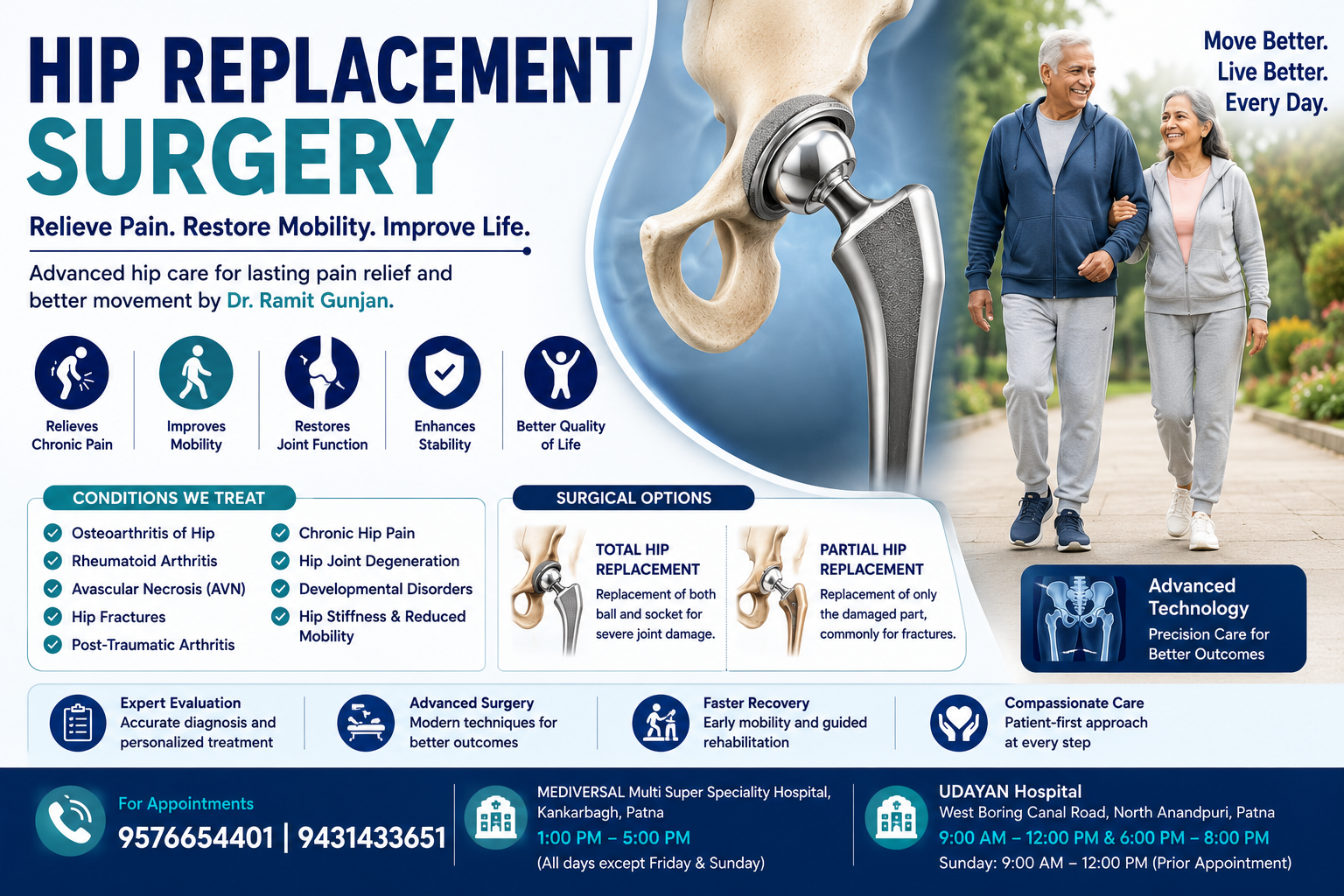
Hip Replacement Surgery in Patna
Advanced Hip Care for Pain Relief and Improved Mobility
Persistent hip pain can make everyday activities such as walking, climbing stairs, sitting, or even sleeping uncomfortable. Hip problems may develop gradually due to arthritis or suddenly after an injury or fracture. When conservative treatments no longer provide adequate relief, Hip Replacement Surgery may be considered after a detailed orthopedic evaluation.
Hip replacement is one of the most effective orthopedic procedures for carefully selected patients with advanced hip joint damage. The primary goal is to reduce pain, improve mobility, and restore function, allowing patients to return to daily activities with greater comfort.
Dr. Ramit Gunjan, an experienced Orthopedic Surgeon in Patna, provides comprehensive evaluation and personalized treatment for patients with various hip disorders. Every treatment recommendation is based on clinical examination, imaging findings, overall health, and the patient’s individual needs.
What is Hip Replacement Surgery?
Hip Replacement Surgery, also known as Total Hip Arthroplasty, is a surgical procedure in which damaged portions of the hip joint are replaced with specially designed artificial components.
The hip is a ball-and-socket joint that allows smooth movement in multiple directions. Healthy cartilage enables painless movement by reducing friction between the bones. When cartilage becomes severely damaged due to arthritis, fractures, or other conditions, the joint may become painful, stiff, and difficult to move.
Hip replacement surgery is designed to restore smoother joint movement and improve overall function for suitable candidates.
Understanding the Hip Joint
The hip joint consists of:
- The femoral head (ball)
- The acetabulum (socket)
- Articular cartilage
- Ligaments
- Muscles
- Tendons
Damage to any of these structures may lead to pain, stiffness, reduced mobility, and difficulty performing everyday activities.
Who May Benefit from Hip Replacement Surgery?
You may benefit from an orthopedic consultation if you experience:
- Persistent hip pain
- Difficulty walking
- Pain while climbing stairs
- Groin pain
- Hip stiffness
- Difficulty standing from a chair
- Pain during rest
- Difficulty sleeping because of hip pain
- Reduced range of motion
- Limping while walking
An orthopedic evaluation helps determine whether surgery or non-surgical treatment is the most appropriate option.
Common Conditions That May Require Hip Replacement
Several orthopedic conditions may lead to severe hip joint damage.
Osteoarthritis
The most common reason for hip replacement surgery. Cartilage gradually wears away, resulting in pain, stiffness, and limited movement.
Rheumatoid Arthritis
An autoimmune condition that causes chronic inflammation and progressive damage to the hip joint.
Avascular Necrosis (AVN)
Reduced blood supply to the femoral head can cause bone tissue to collapse, resulting in severe hip pain and reduced mobility.
Hip Fractures
Certain fractures around the hip, particularly in older adults, may require hip replacement depending on the type and severity of the injury.
Post-Traumatic Arthritis
Hip arthritis that develops after previous fractures or significant injuries.
Developmental Hip Disorders
Some patients develop arthritis due to congenital or developmental abnormalities affecting the hip joint.
Common Symptoms of Hip Joint Problems
Patients with advanced hip conditions commonly report:
- Persistent hip pain
- Pain in the groin
- Pain while walking
- Difficulty climbing stairs
- Hip stiffness
- Reduced flexibility
- Limping
- Difficulty sitting or standing
- Pain during sleep
- Difficulty putting on shoes or socks
- Reduced ability to perform routine activities
Persistent symptoms should be evaluated by an orthopedic specialist.
When Should You Consult an Orthopedic Surgeon?
You should seek orthopedic evaluation if:
- Hip pain persists for several weeks
- Pain interferes with daily activities
- Walking becomes increasingly difficult
- Hip stiffness limits movement
- Conservative treatment is no longer effective
- Pain occurs even during rest
- Hip pain disturbs sleep
- You experience recurrent falls due to hip weakness
- You have suffered a hip injury or fracture
Early diagnosis allows timely treatment and helps prevent further joint deterioration.
Diagnosis Before Hip Replacement Surgery
A detailed orthopedic assessment helps determine the cause and severity of hip joint damage.
Evaluation may include:
- Detailed medical history
- Physical examination
- Hip movement assessment
- Walking pattern evaluation
- Digital X-rays
- MRI Scan (when indicated)
- CT Scan (selected cases)
- Blood investigations
- Assessment of overall medical fitness
These investigations help determine the most appropriate treatment approach.
Non-Surgical Treatment Options
Not every patient with hip pain requires surgery. Depending on the diagnosis, treatment may include:
Medications
Pain-relieving and anti-inflammatory medications may be prescribed when appropriate.
Physiotherapy
A structured rehabilitation program may help improve flexibility, strengthen supporting muscles, and enhance hip function.
Lifestyle Modifications
Patients may benefit from:
- Weight management
- Low-impact exercises
- Activity modification
- Walking aids when required
- Home exercise programs
Joint Injections
In selected cases, injections may be considered as part of a comprehensive treatment plan.
When is Hip Replacement Surgery Recommended?
Hip replacement may be considered when:
- Severe hip arthritis significantly affects daily life
- Pain persists despite conservative treatment
- Walking becomes increasingly difficult
- Hip stiffness limits normal activities
- Imaging confirms advanced joint damage
- Quality of life is substantially affected
The decision for surgery is always individualized and made after careful orthopedic evaluation.
Types of Hip Replacement Surgery
Depending on the patient’s condition, the orthopedic surgeon may recommend:
Total Hip Replacement
Both the ball and socket components of the hip joint are replaced with artificial implants.
Partial Hip Replacement
Only the damaged portion of the hip joint is replaced. This may be considered for selected fracture cases.
Revision Hip Replacement
In certain situations, revision surgery may be required for patients who previously underwent hip replacement and need further evaluation or treatment.
Conditions Commonly Evaluated
Dr. Ramit Gunjan evaluates patients with:
- Hip Osteoarthritis
- Rheumatoid Arthritis
- Hip AVN (Avascular Necrosis)
- Hip Fractures
- Chronic Hip Pain
- Hip Joint Degeneration
- Post-Traumatic Arthritis
- Hip Stiffness
- Reduced Hip Mobility
- Hip Joint Disorders
Each patient receives a personalized treatment plan based on clinical findings, imaging results, age, activity level, and treatment goals.
Benefits of Hip Replacement Surgery
For patients who are suitable candidates, hip replacement surgery can help relieve chronic pain, improve joint function, and restore mobility. Individual outcomes vary depending on factors such as age, overall health, the severity of joint damage, and commitment to rehabilitation.
Potential benefits include:
- Reduced chronic hip pain
- Improved walking ability
- Better hip joint mobility
- Increased range of motion
- Enhanced stability
- Improved quality of life
- Greater independence in daily activities
- Better sleep affected by hip pain
- Improved ability to perform routine tasks
- Increased confidence in movement
A detailed orthopedic evaluation helps determine whether hip replacement surgery is the most appropriate treatment option.
Recovery After Hip Replacement Surgery
Recovery is a gradual process and differs from person to person. Following your orthopedic surgeon’s instructions and participating in rehabilitation are essential for optimal recovery.
Recovery generally includes:
Early Mobilization
Patients are usually encouraged to begin gentle movement and assisted walking under medical supervision as appropriate.
Physiotherapy
A structured physiotherapy program focuses on:
- Restoring hip movement
- Improving muscle strength
- Enhancing flexibility
- Improving walking pattern
- Balance training
- Functional rehabilitation
Home Recovery
Recovery at home typically includes:
- Performing prescribed exercises
- Following wound care instructions
- Taking medications as advised
- Using walking aids when required
- Attending scheduled follow-up appointments
- Gradually increasing daily activities
Following the rehabilitation program helps support healing and improve long-term outcomes.
Long-Term Hip Care
Maintaining a healthy lifestyle can help preserve joint function after treatment.
Recommendations include:
- Maintain a healthy body weight
- Stay physically active
- Perform low-impact exercises
- Strengthen hip and core muscles
- Avoid excessive strain on the joint
- Wear supportive footwear
- Follow physiotherapy recommendations
- Attend routine follow-up visits
- Maintain good posture during daily activities
These habits contribute to long-term joint health and mobility.
Why Choose Dr. Ramit Gunjan?
Dr. Ramit Gunjan provides evidence-based orthopedic care with an emphasis on accurate diagnosis, individualized treatment planning, and patient-centered rehabilitation.
Patients choose Dr. Ramit Gunjan for:
- Comprehensive orthopedic evaluation
- Personalized treatment plans
- Expertise in hip joint disorders
- Advanced surgical techniques
- Modern diagnostic approach
- Compassionate patient care
- Individualized rehabilitation guidance
- Focus on restoring mobility and improving quality of life
- Continuity of care from diagnosis through recovery
Every treatment recommendation is based on the patient’s medical condition, imaging findings, lifestyle, and functional goals.
Frequently Asked Questions (FAQs)
Is hip replacement surgery always necessary for hip arthritis?
No. Many patients improve with non-surgical treatments such as medications, physiotherapy, activity modification, and lifestyle changes. Surgery is considered only when these measures no longer provide adequate relief.
How long does recovery take after hip replacement?
Recovery varies from person to person. Factors such as age, overall health, rehabilitation, and the type of surgery influence recovery time.
Will I need physiotherapy after surgery?
Yes. Physiotherapy plays an important role in improving strength, flexibility, balance, and overall hip function after surgery.
Can younger patients undergo hip replacement?
Age alone does not determine suitability for surgery. The decision depends on the underlying condition, severity of joint damage, symptoms, and overall health.
How long do hip implants last?
The longevity of hip implants depends on several factors, including implant type, activity level, body weight, and overall health. Your orthopedic surgeon will discuss expectations based on your individual condition.
Can I return to normal activities after surgery?
Many patients gradually return to routine daily activities after successful surgery and rehabilitation. Your surgeon will guide you regarding activity progression and any long-term precautions.
Is hip replacement surgery safe?
Hip replacement is a commonly performed orthopedic procedure. As with any surgery, there are potential risks and benefits, which will be discussed during your consultation based on your individual health condition.
Why Early Diagnosis Matters
Persistent hip pain should not be ignored. Early orthopedic evaluation can help identify the underlying cause before joint damage progresses further. Timely diagnosis allows patients to explore appropriate treatment options and maintain better long-term mobility and quality of life.
Related Orthopedic Services
You may also be interested in:
- Joint Replacement Surgery
- Knee Replacement Surgery
- Arthritis Treatment
- Arthroscopy Surgery
- Sports Injury Treatment
- Trauma & Fracture Care
- Bone Fracture Treatment
- Back Pain Treatment
- Neck Pain Treatment
Book Your Consultation with Dr. Ramit Gunjan
If persistent hip pain, stiffness, or reduced mobility is affecting your daily life, consult Dr. Ramit Gunjan, an experienced Orthopedic Surgeon in Patna, for a comprehensive evaluation and personalized treatment plan.
📍 Consultation Available At
🏥 MEDIVERSAL Multi Super Speciality Hospital, Kankarbagh
🕐 1:00 PM – 5:00 PM
(All days except Friday & Sunday)
🏥 UDAYAN Hospital
📍 West Boring Canal Road, North Anandpuri, Patna
🕘 9:00 AM – 12:00 PM & 6:00 PM – 8:00 PM
Sunday: 9:00 AM – 12:00 PM (Prior Appointment)
📞 Appointments
9576654401 | 9431433651